There are a number of headline events in Day 10 at the 2014 Winter Olympics in Sochi that are sure to change the outlook of the medal count.
The men take the stage in snowboard cross, the ice dancing medals will be awarded and the two-man bobsled race sees its final runs. Every event is taking on added importance for the overarching competition that is the medal count as it becomes increasingly close at the top.
The Netherlands, which has proven dominant on the speedskating ice, Russia and the United States are setting the pace, but Norway and Canada are right in contention.
Let’s dig a bit deeper into some of the key events of Day 10 that will directly impact the medal count.
Key Day 10 Events
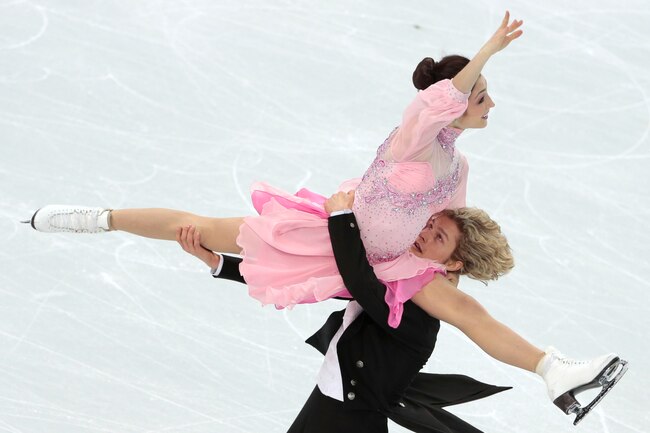
Ice Dancing Free Skate
It was a yet another display of pure dominance for Americans Meryl Davis and Charlie White in the short dance portion of the ice dancing competition.
The pair took a commanding 2.58-point lead over training partners and friends Tessa Virtue and Scott Moir of Canada. Figure skating is a sport that often comes down to tenths of a point, so having an early cushion will certainly be critical for the Red, White and Blue.
It was such a great performance that Davis felt like she was in a dream, as she said in an interview after the race in comments that were passed along by The Associated Press (via ESPN.com): "I told Charlie in the middle of the program I felt like I was in a dream. It is such a surreal experience."
The American ice dancers have not lost in nearly two years and are the defending world champions. It would be a complete upset if they took home anything other than the gold, which would be the first for the United States in ice dancing.
It is also a tight race for the bronze between the French and the Russians.
Men’s Snowboard Cross
Snowboard cross is one of the most unpredictable sports in all of the Olympics.
For further proof of that, consider the fact that the defending gold medalist, Seth Wescott, did not even make the American team for Sochi.
Instead, Nate Holland will headline the team for the United States. Joining him are Nick Baumgartner, Trevor Jacob and Alex Deibold. Holland finished in fourth place in the 2010 Olympics in Vancouver and is on the short list for the podium.
His top competition will come in the form of Australia’s Alex Pullin and Austria’s Markus Schairer, who finished No. 1 and No. 2 at the 2013 World Championships.
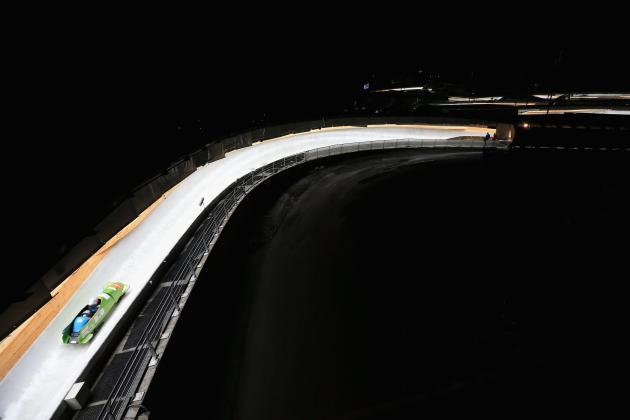
Men’s Two-Man Bobsled
It doesn’t get much tighter than the men’s two-man bobsled after two runs. There is a mere .16 of a second separating second place from sixth place, although Russia’s Alexander Zubkov leads everyone by .32 of a second.
Defending World Cup champion and American Steven Holcomb is in third place heading into the final two runs. The United States hasn’t won a medal in two-man bobsled since 1952.
One person who will be cheering Holcomb on is actor William Shatner:
If Zubkov adds the gold medal to his resume, it would join a bronze from the 2006 Olympics in Torino and a four-man silver in the 2010 Olympics in Vancouver.
Source: Bleacherreport
This blog is sponsored by: http://8070132083.acnshop.eu
Showing posts with label Medal. Show all posts
Monday, February 17, 2014
Sunday, February 16, 2014
Olympic Ski Jumping 2014: Men's Large Hill Medal Winners and Results
Kamil Stoch won his second gold medal at the 2014 Winter Olympics thanks to a fantastic performance in the ski jumping large-hill event.
The Polish star won the normal-hill competition earlier in the week and then built up a big lead in this event thanks to a score of 143.4 with his first jump. However, Japan's Noriaki Kasai kept the pressure on with two top-three jumps of his own.
Still, the judges gave Stoch just enough points to stay ahead of his opponent and take home another gold medal.
Peter Prevc who earned a silver medal in the normal hill had the best second jump in the competition and earned bronze.
Here is a look at the top 10, courtesy of Sochi2014.com:
Men's Ski Jumping Large Hill Results
Rank Name Country Score
1 Kamil Stoch Poland 278.7
2 Noriaki Kasai Japan 277.4
3 Peter Prevc Slovenia 274.8
4 Severin Freund Germany 272.2
5 Anders Fannemel Norway 264.3
6 Marinus Kraus Germany 257.4
7 Gregor Schlierenzauer Austria 255.2
8 Michael Hayboeck Austria 254.7
9 Daiki Ito Japan 252.5
10 Reruhi Shimizu Japan 252.2
via Sochi2014.com
This competition featured two medalists from the 2010 Vancouver Games, including four-time gold medalist Simon Ammann. However, the Austrian simply did not have it in him, finishing in 23rd place. Two-time individual bronze medalist Gregor Schlierenzauer only managed a seventh-place finish.

It seemed like no one was going to beat Stoch unless he somehow struggled, which clearly did not happen on Saturday.
Interestingly, the World Cup winner had dealt with multiple problems during his time at Sochi when he was not competing.
He was sick during the day before winning the gold medal in the normal hill. According to The Associated Press (h/t ESPN), he explained, "When I woke up I felt a headache and I had a high temperature, but the doctors did everything they could do (sic) bring me to life and they did. They did a good job, so thanks to them."
The Polish star then dealt with a bad crash during training for the large hill but shook off his injuries. He told Rosa Khutor of Reuters, "I feel very good and my jumps were also good. My elbow is hurting slightly but it's not a big problem."
Fortunately, he had no such problems once the competition started, as he was able to finish with his second gold medal of these Games. He was also carried off the course yet again by his teammates:
The United States did have three athletes qualify for the first jump, although expectations were not too high based on recent history:
Things certainly did not get off to a good start when Anders Johnson was disqualified for having an illegal suit, according to Douglas Gelevan of CBC:
Nicholas Alexander finished in 48th place while Nicholas Fairall ended in 35th, neither man qualifying for the final round.
Still, the big man of the day is Stoch, who proved in Sochi that he is truly the best ski jumper in the world. Kasai put forth a great effort to get to the top of the podium, but the 41-year-old veteran will have to settle for a silver.
Of course, this result has a big effect on the world of ski jumping. Stoch has now won two Olympic events, the World Cup and the most recent world championships in Val di Fiemme. It is clear that he is just entering his prime at 26 years old and will likely win many more awards in the future.
Then again, the young challenger Prevc is still improving and showed he is capable of some big results, as described by Greg Ferraro of NBC Olympics:
It remains to be seen if the 21-year-old Slovenian can win gold in the future, but he is certain to provide plenty of competition going forward.
For more ski jumping action, tune into the men's team competition Feb. 17 at 12:15 ET.
This blog is sponsored by: http://8070132083.acnshop.eu
The Polish star won the normal-hill competition earlier in the week and then built up a big lead in this event thanks to a score of 143.4 with his first jump. However, Japan's Noriaki Kasai kept the pressure on with two top-three jumps of his own.
Still, the judges gave Stoch just enough points to stay ahead of his opponent and take home another gold medal.
Peter Prevc who earned a silver medal in the normal hill had the best second jump in the competition and earned bronze.
Here is a look at the top 10, courtesy of Sochi2014.com:
Men's Ski Jumping Large Hill Results
Rank Name Country Score
1 Kamil Stoch Poland 278.7
2 Noriaki Kasai Japan 277.4
3 Peter Prevc Slovenia 274.8
4 Severin Freund Germany 272.2
5 Anders Fannemel Norway 264.3
6 Marinus Kraus Germany 257.4
7 Gregor Schlierenzauer Austria 255.2
8 Michael Hayboeck Austria 254.7
9 Daiki Ito Japan 252.5
10 Reruhi Shimizu Japan 252.2
via Sochi2014.com
This competition featured two medalists from the 2010 Vancouver Games, including four-time gold medalist Simon Ammann. However, the Austrian simply did not have it in him, finishing in 23rd place. Two-time individual bronze medalist Gregor Schlierenzauer only managed a seventh-place finish.
It seemed like no one was going to beat Stoch unless he somehow struggled, which clearly did not happen on Saturday.
Interestingly, the World Cup winner had dealt with multiple problems during his time at Sochi when he was not competing.
He was sick during the day before winning the gold medal in the normal hill. According to The Associated Press (h/t ESPN), he explained, "When I woke up I felt a headache and I had a high temperature, but the doctors did everything they could do (sic) bring me to life and they did. They did a good job, so thanks to them."
The Polish star then dealt with a bad crash during training for the large hill but shook off his injuries. He told Rosa Khutor of Reuters, "I feel very good and my jumps were also good. My elbow is hurting slightly but it's not a big problem."
Fortunately, he had no such problems once the competition started, as he was able to finish with his second gold medal of these Games. He was also carried off the course yet again by his teammates:
The United States did have three athletes qualify for the first jump, although expectations were not too high based on recent history:
Things certainly did not get off to a good start when Anders Johnson was disqualified for having an illegal suit, according to Douglas Gelevan of CBC:
Nicholas Alexander finished in 48th place while Nicholas Fairall ended in 35th, neither man qualifying for the final round.
Still, the big man of the day is Stoch, who proved in Sochi that he is truly the best ski jumper in the world. Kasai put forth a great effort to get to the top of the podium, but the 41-year-old veteran will have to settle for a silver.
Of course, this result has a big effect on the world of ski jumping. Stoch has now won two Olympic events, the World Cup and the most recent world championships in Val di Fiemme. It is clear that he is just entering his prime at 26 years old and will likely win many more awards in the future.
Then again, the young challenger Prevc is still improving and showed he is capable of some big results, as described by Greg Ferraro of NBC Olympics:
It remains to be seen if the 21-year-old Slovenian can win gold in the future, but he is certain to provide plenty of competition going forward.
For more ski jumping action, tune into the men's team competition Feb. 17 at 12:15 ET.
This blog is sponsored by: http://8070132083.acnshop.eu
Thursday, February 13, 2014
Olympic Skeleton 2014: Results Tracker, Medal Winners and More
Welcome to Bleacher Report’s hub for all things Olympic skeleton. We’ll provide you with updates and analyses right here after each event of the competition in Sochi.
For a crash course in the sport’s top storylines and athletes to watch, be sure to check out B/R’s Complete Guide to Olympic Skeleton.
This blog is sponsored by: http://visitwebpages.info/paypalchecks
For a crash course in the sport’s top storylines and athletes to watch, be sure to check out B/R’s Complete Guide to Olympic Skeleton.
This blog is sponsored by: http://visitwebpages.info/paypalchecks
Olympic Bobsled 2014: Complete Guide for Sochi Winter Olympics
The high-speed bobsled event begins its run at the Winter Olympics on Feb. 16 and finishes on Feb. 23.
Although the sport receives little attention most of the time in the United States, it is put in the spotlight every four years at the Olympics.
Germany has been the dominant country in recent Olympic bobsled competition, but an American team won the gold medal in the four-man bobsled event at the 2010 Winter Olympics.
American women have won a medal in each of the three Olympics that featured the women’s bobsled event.
Olympic bobsled competition, officially known as bobsleigh, consists of three events: men's four-man, men's two-man and women's bobsled, which is a two-person competition.
Participants in each discipline complete four runs over two days, with the lowest cumulative time from the four runs determining the order of finish and medal awards.
Bobsledders reached speeds of nearly 95 miles per hour at the Vancouver Games four years ago, but the track for this Olympics is expected to be slower.
The venue for the 2014 bobsledding event is the Sliding Center Sanki, located in Rzhanaya Polyana, Russia, which is about 37 miles from Sochi. The course is 1,500 meters long, not including the 314-meter braking area at the end of a run. According to a CBC story, maximum speed is 135 kilometers per hour, which is about 84 miles per hour.
Bobsled competition will begin Feb. 16 with heats in the two man-event. Bobsledding concludes Feb. 23 with the final heats of the four-man event.
The United States will have three teams competing in the women's and two-man bobsled competitions and two in the four-man event. The U.S. is considered a gold-medal contender in all three.
Bobsledding first became an Olympic event in the 1924 Winter Games in Chamonix, France. Only four-man bobsled competition was held in 1924, and it was changed to a five-man event in the 1928 Winter Games before reverting back to a four-man competition in 1932.
Two-man bobsled competition was added to the Olympics at the 1932 Winter Games at Lake Placid, N.Y., and women's bobsledding became an Olympic sport in 2002 at Salt Lake City, Utah.
No bobsledding competition was held at the 1960 Winter Games in Squaw Valley, N.Y., but it has been an Olympic event in every Winter Games since.
Americans captured the gold medal in the three disciplines the first year each was an Olympic event, and American women have medaled each of the three years the Olympics featured women's bobsledding.
Germans have dominated men's bobsledding, winning the gold medal at the last three Olympics in the two-man event and taking first place in four of the past five Olympics in the four-man category. A team from Germany (including East Germany and West Germany when the country was divided) has won 15 gold medals in the 38 men's Olympic bobsled competitions held. Switzerland is next with nine gold medals in men's events.
Germany's Andre Lange has won four Olympic bobsled gold medals, the most in history. He won his second straight two-man gold medal in 2010 but finished second in the four-man competition that year before retiring.
An American four-man team led by pilot Steven Holcomb finished first in the 2010 Olympics, giving the United States its first men's bobsled gold medal since 1948. German teams finished second and fourth.
Canadian teams finished first and second in the women's bobsled competition at the 2010 Games, with Kaillie Humphries and Heather Moss capturing the gold medal.
Schedule of heats for the 2014 Olympic bobsled competition:
February 16: Two-man heats 1 and 2, 11:15 a.m. ET
February 17: Two-man heats 3 and 4, 9:30 a.m. ET
February 18: Women's heats 1 and 2, 10:15 a.m. ET
February 19: Women's heats 3 and 4, 11:15 a.m. ET
February 22: Men's four-man heats 1 and 2, 11:30 a.m. ET
February 23: Men's four-man heats 3 and 4, 4:30 a.m. ET
All events will be streamed live on NBCOlympics.com.
This blog is sponsored by: http://visitwebpages.info/paypalchecks
Although the sport receives little attention most of the time in the United States, it is put in the spotlight every four years at the Olympics.
Germany has been the dominant country in recent Olympic bobsled competition, but an American team won the gold medal in the four-man bobsled event at the 2010 Winter Olympics.
American women have won a medal in each of the three Olympics that featured the women’s bobsled event.
Olympic bobsled competition, officially known as bobsleigh, consists of three events: men's four-man, men's two-man and women's bobsled, which is a two-person competition.
Participants in each discipline complete four runs over two days, with the lowest cumulative time from the four runs determining the order of finish and medal awards.
Bobsledders reached speeds of nearly 95 miles per hour at the Vancouver Games four years ago, but the track for this Olympics is expected to be slower.
The venue for the 2014 bobsledding event is the Sliding Center Sanki, located in Rzhanaya Polyana, Russia, which is about 37 miles from Sochi. The course is 1,500 meters long, not including the 314-meter braking area at the end of a run. According to a CBC story, maximum speed is 135 kilometers per hour, which is about 84 miles per hour.
Bobsled competition will begin Feb. 16 with heats in the two man-event. Bobsledding concludes Feb. 23 with the final heats of the four-man event.
The United States will have three teams competing in the women's and two-man bobsled competitions and two in the four-man event. The U.S. is considered a gold-medal contender in all three.
Bobsledding first became an Olympic event in the 1924 Winter Games in Chamonix, France. Only four-man bobsled competition was held in 1924, and it was changed to a five-man event in the 1928 Winter Games before reverting back to a four-man competition in 1932.
Two-man bobsled competition was added to the Olympics at the 1932 Winter Games at Lake Placid, N.Y., and women's bobsledding became an Olympic sport in 2002 at Salt Lake City, Utah.
No bobsledding competition was held at the 1960 Winter Games in Squaw Valley, N.Y., but it has been an Olympic event in every Winter Games since.
Americans captured the gold medal in the three disciplines the first year each was an Olympic event, and American women have medaled each of the three years the Olympics featured women's bobsledding.
Germans have dominated men's bobsledding, winning the gold medal at the last three Olympics in the two-man event and taking first place in four of the past five Olympics in the four-man category. A team from Germany (including East Germany and West Germany when the country was divided) has won 15 gold medals in the 38 men's Olympic bobsled competitions held. Switzerland is next with nine gold medals in men's events.
Germany's Andre Lange has won four Olympic bobsled gold medals, the most in history. He won his second straight two-man gold medal in 2010 but finished second in the four-man competition that year before retiring.
An American four-man team led by pilot Steven Holcomb finished first in the 2010 Olympics, giving the United States its first men's bobsled gold medal since 1948. German teams finished second and fourth.
Canadian teams finished first and second in the women's bobsled competition at the 2010 Games, with Kaillie Humphries and Heather Moss capturing the gold medal.
Schedule of heats for the 2014 Olympic bobsled competition:
February 16: Two-man heats 1 and 2, 11:15 a.m. ET
February 17: Two-man heats 3 and 4, 9:30 a.m. ET
February 18: Women's heats 1 and 2, 10:15 a.m. ET
February 19: Women's heats 3 and 4, 11:15 a.m. ET
February 22: Men's four-man heats 1 and 2, 11:30 a.m. ET
February 23: Men's four-man heats 3 and 4, 4:30 a.m. ET
All events will be streamed live on NBCOlympics.com.
This blog is sponsored by: http://visitwebpages.info/paypalchecks
Olympic 2014 Results: Tracking Medal Count for Each Country on Day 6
The medal race at the 2014 Winter Olympics took another turn on Day 4 as Norway jumped into the overall lead.
However, Canada, the Netherlands, Russia and the United States are still within striking distance heading into Wednesday's action.
Germany has also emerged as a contender after claiming two gold medals on Tuesday.
With that in mind, below we'll take a closer look at the updated medal count heading into Day 5 and highlight some of the top performing nations thus far.
Norway Picks Up Medals in Biathlon, Cross-Country
Norway was by far the biggest winner on Day 4, earning four medals in all, including two gold medals in cross-country.
Maiken Caspersen Falla and Ola Vigen Hattestad won the women's and men's sprint free competitions, respectively, posting impressive times and edging out stiff competition in the process.
In the women's event, Norway's Ingvild Flugstad Oestberg also finished second to secure the silver medal.
The Scandinavian powerhouse would pick up another medal later in the day with Tora Berger taking home silver in the women's biathlon 10-kilometer pursuit. Berger's time of 30 minutes and 8.3 seconds, which included just one penalty, was 37.6 seconds off Darya Domracheva's gold-medal-winning pace.
Despite Norway's big day in biathlon and cross-country, the Olympic leaders saw opportunities go by the wayside in women's ski jumping, as Maren Lundby and Line Jahr finished eighth and ninth respectively, in the ladies' normal hill.
Lundby's 120.0 second-run score was among the best of the competition, but it wasn't enough to put her and Norway on the podium.
Canada Maintains Dominance on Slopes
Although Day 4 was one to forget for ladies' ski slopestyle favorite Kaya Turski, Canadians had plenty to cheer about at Rosa Khutor Extreme Park as Dara Howell and Kim Lamarre each landed on the podium.
Howell's first-run score of 94.20 was enough to win gold. Afterwards, the 19-year-old dedicated her run to fallen compatriot Sarah Burke, per The Guardian's Steve Busfield:
I said the other day that I really hope a Canadian brings home a gold medal and it will be for Sarah. This medal is definitely for Sarah. She pushed the sport. She always wanted to see the progression. To see the girls throwing what the guys were throwing...today I feel like that's what I did.
American Devin Logan scored 85.40 on her first run to secure silver. But the most dramatic second run was Kim Lamarre's, which scored an 85.00, enough to propel her from the bottom to the bronze.
Despite the strong Canadian presence on the podium, Turski's disappointing exit in the qualifying round and Yuki Tsubota's nasty fall likely cost the North Americans a shot at another medal on Day 4.
Germany is Golden on Day 4
While Norway earned four medals total on Day 4, Germany was every bit as successful, coming away with three, including two golds to create a three-way tie for most gold medals thus far.
Natalie Geisenberger's triumph in the women's singles luge and Carina Vogt's inspiring performance in the first-ever ladies' normal hill ski jumping event have the European powerhouse in the medal race mix.
Meanwhile, luge silver medalist Tatjana Huefner earned Germany's first silver medal of the Games.
Unsurprisingly, after her landmark victory in ski jumping, Vogt was overcome with joy, per BBC Sport's Rob Hodgetts: "It's amazing; I'm the first women's champion in ski jumping."
Germany will have a shot to add to their tally on Day 5, when Alpine skier Viktoria Rebensburg will go for gold in the women's downhill. The Germans will also have podium opportunities in pairs figure skating, luge doubles, Nordic combined and speedskating.
This blog is sponsored by: http://visitwebpages.info/paypalchecks
However, Canada, the Netherlands, Russia and the United States are still within striking distance heading into Wednesday's action.
Germany has also emerged as a contender after claiming two gold medals on Tuesday.
With that in mind, below we'll take a closer look at the updated medal count heading into Day 5 and highlight some of the top performing nations thus far.
Norway Picks Up Medals in Biathlon, Cross-Country
Norway was by far the biggest winner on Day 4, earning four medals in all, including two gold medals in cross-country.
Maiken Caspersen Falla and Ola Vigen Hattestad won the women's and men's sprint free competitions, respectively, posting impressive times and edging out stiff competition in the process.
In the women's event, Norway's Ingvild Flugstad Oestberg also finished second to secure the silver medal.
The Scandinavian powerhouse would pick up another medal later in the day with Tora Berger taking home silver in the women's biathlon 10-kilometer pursuit. Berger's time of 30 minutes and 8.3 seconds, which included just one penalty, was 37.6 seconds off Darya Domracheva's gold-medal-winning pace.
Despite Norway's big day in biathlon and cross-country, the Olympic leaders saw opportunities go by the wayside in women's ski jumping, as Maren Lundby and Line Jahr finished eighth and ninth respectively, in the ladies' normal hill.
Lundby's 120.0 second-run score was among the best of the competition, but it wasn't enough to put her and Norway on the podium.
Canada Maintains Dominance on Slopes
Although Day 4 was one to forget for ladies' ski slopestyle favorite Kaya Turski, Canadians had plenty to cheer about at Rosa Khutor Extreme Park as Dara Howell and Kim Lamarre each landed on the podium.
Howell's first-run score of 94.20 was enough to win gold. Afterwards, the 19-year-old dedicated her run to fallen compatriot Sarah Burke, per The Guardian's Steve Busfield:
I said the other day that I really hope a Canadian brings home a gold medal and it will be for Sarah. This medal is definitely for Sarah. She pushed the sport. She always wanted to see the progression. To see the girls throwing what the guys were throwing...today I feel like that's what I did.
American Devin Logan scored 85.40 on her first run to secure silver. But the most dramatic second run was Kim Lamarre's, which scored an 85.00, enough to propel her from the bottom to the bronze.
Despite the strong Canadian presence on the podium, Turski's disappointing exit in the qualifying round and Yuki Tsubota's nasty fall likely cost the North Americans a shot at another medal on Day 4.
Germany is Golden on Day 4
While Norway earned four medals total on Day 4, Germany was every bit as successful, coming away with three, including two golds to create a three-way tie for most gold medals thus far.
Natalie Geisenberger's triumph in the women's singles luge and Carina Vogt's inspiring performance in the first-ever ladies' normal hill ski jumping event have the European powerhouse in the medal race mix.
Meanwhile, luge silver medalist Tatjana Huefner earned Germany's first silver medal of the Games.
Unsurprisingly, after her landmark victory in ski jumping, Vogt was overcome with joy, per BBC Sport's Rob Hodgetts: "It's amazing; I'm the first women's champion in ski jumping."
Germany will have a shot to add to their tally on Day 5, when Alpine skier Viktoria Rebensburg will go for gold in the women's downhill. The Germans will also have podium opportunities in pairs figure skating, luge doubles, Nordic combined and speedskating.
This blog is sponsored by: http://visitwebpages.info/paypalchecks
Wednesday, February 12, 2014
Olympic 2014 Results: Tracking Medal Count for Each Country on Day 5
After two days of competition in Sochi, Norway is atop the medal table.
Marit Bjoergen (cross-country) and Ole Einar Bjoerndalen (biathalon) have captured gold medals, while Staale Sandbech (snowboarding) won a silver and four other Norwegian athletes have already notched third-place finishes.
Norway is tied with both the United States and Netherlands for gold medals, but in terms of total count, they have established an early commanding lead after taking home three bronzes on Sunday.
It's still early, though, and Day 3 will see several more medals awarded. Here's a look at the updated tally as Monday's events play out:
Note: You can click here for a complete look at Monday's (Day 3) schedule and results, courtesy of Sochi2014.com.
First up on Day 3 is the women's super combined slalom.
Germany flag-bearer Maria Hoefl-Riesch, who won gold in this event at the 2010 Olympics and then again at the 2013 World Championships, is undoubtedly the favorite.
On Friday, though, she expressed concern with the course, via Reuters, courtesy of NBCOlympics.com:
I think it's a bit over the top to move the gate around before the jump they reduced yesterday, and add even more curves to the track, because it wasn't fast anyway yesterday. The jump was not a good one, but the pace wasn't too fast. But now they've reduced the pace even more, so that part is not a downhill. It's too slow - not a downhill.
If Hoefl-Riesch's discomfort with the course dislodges her from the top of the podium, there's a good chance an Austrian will take her spot.
Nicole Hosp (2013 bronze medalist in the super combined at the World Championships), Anna Fenninger (2011 world champion in the super combined) and Michaela Kirchgasser (two-time world champion) are all legitimate contenders for the podium.
Slovenia's Tina Maze and the United States' Julia Mancuso will also challenge Hoefl-Riesch. The latter hasn't had a great season, but as Sports Illustrated's Tim Layden wrote, that means very little:
Finally, Marie-Michele Gagnon of Canada, who should make some considerable noise in her Olympic debut, is another name to watch in the stacked field.
Over on the oval, two finals will take place.
On the short track, Canada's Charles Hamelin, who won two gold medals in Vancouver and has three Olympic medals total, will be the slight favorite in the 1,500 meters, but South Korea's Lee Han-Bin and Sin Da-Woon, Russian Victor An and American J.R. Celski are strong contenders.
In the men's short-distance (500 meters) speeskating, 2010 Olympic gold medalist Mo Tae-Bum of South Korea is undoubtedly the skater to watch. In addition to his win in the Vancouver Games, he has two straight World Championship titles in this same event.
He has competition, though, especially from the Netherlands. Brothers Michael and Ronald Mulder should challenge Mo, while countryman Jan Smeekens is a solid bet to be in the mix at the finish line. The Americans will lean on Tucker Fredricks and Mitchell Whitmore to help bring gold back to the United States, which won this event in 2002 and 2006.
Finally, we have the men's 12.5-km pursuit, where Bjoerndalen will go off first in search of a record 13th Winter Olympics medal.
American Tim Burke, who will start 19th in the event, had high words of praise for the decorated Norwegian, via NBCOlympics.com's Nick Zaccardi:
He’s single handedly changed the sport. He really turned it into a professional sport, in the late ‘90s, I would say. He’s very innovative, and he became so dominant that everyone else had to react to the way he was training to be competitive.
This usually isn't an event that is too popular, but on Monday, there's a good chance you'll get to witness history with Bjoerndalen.
This blog is sponsored by: http://8070132083.acnshop.eu
Marit Bjoergen (cross-country) and Ole Einar Bjoerndalen (biathalon) have captured gold medals, while Staale Sandbech (snowboarding) won a silver and four other Norwegian athletes have already notched third-place finishes.
Norway is tied with both the United States and Netherlands for gold medals, but in terms of total count, they have established an early commanding lead after taking home three bronzes on Sunday.
It's still early, though, and Day 3 will see several more medals awarded. Here's a look at the updated tally as Monday's events play out:
Note: You can click here for a complete look at Monday's (Day 3) schedule and results, courtesy of Sochi2014.com.
First up on Day 3 is the women's super combined slalom.
Germany flag-bearer Maria Hoefl-Riesch, who won gold in this event at the 2010 Olympics and then again at the 2013 World Championships, is undoubtedly the favorite.
On Friday, though, she expressed concern with the course, via Reuters, courtesy of NBCOlympics.com:
I think it's a bit over the top to move the gate around before the jump they reduced yesterday, and add even more curves to the track, because it wasn't fast anyway yesterday. The jump was not a good one, but the pace wasn't too fast. But now they've reduced the pace even more, so that part is not a downhill. It's too slow - not a downhill.
If Hoefl-Riesch's discomfort with the course dislodges her from the top of the podium, there's a good chance an Austrian will take her spot.
Nicole Hosp (2013 bronze medalist in the super combined at the World Championships), Anna Fenninger (2011 world champion in the super combined) and Michaela Kirchgasser (two-time world champion) are all legitimate contenders for the podium.
Slovenia's Tina Maze and the United States' Julia Mancuso will also challenge Hoefl-Riesch. The latter hasn't had a great season, but as Sports Illustrated's Tim Layden wrote, that means very little:
Finally, Marie-Michele Gagnon of Canada, who should make some considerable noise in her Olympic debut, is another name to watch in the stacked field.
Over on the oval, two finals will take place.
On the short track, Canada's Charles Hamelin, who won two gold medals in Vancouver and has three Olympic medals total, will be the slight favorite in the 1,500 meters, but South Korea's Lee Han-Bin and Sin Da-Woon, Russian Victor An and American J.R. Celski are strong contenders.
In the men's short-distance (500 meters) speeskating, 2010 Olympic gold medalist Mo Tae-Bum of South Korea is undoubtedly the skater to watch. In addition to his win in the Vancouver Games, he has two straight World Championship titles in this same event.
He has competition, though, especially from the Netherlands. Brothers Michael and Ronald Mulder should challenge Mo, while countryman Jan Smeekens is a solid bet to be in the mix at the finish line. The Americans will lean on Tucker Fredricks and Mitchell Whitmore to help bring gold back to the United States, which won this event in 2002 and 2006.
Finally, we have the men's 12.5-km pursuit, where Bjoerndalen will go off first in search of a record 13th Winter Olympics medal.
American Tim Burke, who will start 19th in the event, had high words of praise for the decorated Norwegian, via NBCOlympics.com's Nick Zaccardi:
He’s single handedly changed the sport. He really turned it into a professional sport, in the late ‘90s, I would say. He’s very innovative, and he became so dominant that everyone else had to react to the way he was training to be competitive.
This usually isn't an event that is too popular, but on Monday, there's a good chance you'll get to witness history with Bjoerndalen.
This blog is sponsored by: http://8070132083.acnshop.eu
Julia Mancuso Fails to Medal in Women's Downhill Final at Sochi 2014
Julia Mancuso failed to ride the wave of momentum to another medal at the 2014 Winter Olympics in Sochi. The American was coming off a bronze in the women's super combined, but wasn't able to reach the podium again in the downhill.
NBC Olympics provided word of Mancuso's latest result:
Mancuso entered the Olympics with a lack of hype despite her previous success at the Games. Her medal performances in both 2006 and 2010 showed the big stages always seems to bring the best out of her, at this year was no different at the outset.
She put together a tremendous downhill showing in the first part of the super combined event to take a sizable lead into the slalom. Even though her run in the second half was average at best, it was still enough to add a bronze medal to her collection.
The U.S. Olympic Team also noted it made her the country's first skier to land on the podium at three different Games:
When you combined her great run in the downhill half of the super combined with her experience, it was easy to see why she was one of the top contenders heading into the event.
Mancuso also sports plenty of self-belief. It's something she talked about after winning bronze in her first event, as passed along by Barry Svrluga of the Washington Post:
I've always just had that real belief that I can do it. For me, putting out these dreams and beliefs that I can come in here and have a medal, and everyone being a little skeptical and just knowing in my heart that I can do it, was kind of like crossing the finish line being like, 'See, it works! Believing in yourself really works!'
Given her Olympic success, it's hard to argue with her mantra.
Unfortunately for Mancuso, she wasn't able to capture another medal in the downhill. After putting everything on the line during the super combined, she just wasn't able to muster another elite performance to end up on the podium again.
It's a disappointing result given her downhill greatness during the super combined. That said, even if she leaves Sochi with just one medal around her neck that will be a success. So anything more from this point forward would be a bonus.
She has already added to her legacy of being one of the top American skiers in Winter Olympic history. Failing to medal in the downhill doesn't change that as she looks ahead to her remaining events.
This blog is sponsored by: http://8070132083.acnshop.eu
NBC Olympics provided word of Mancuso's latest result:
Mancuso entered the Olympics with a lack of hype despite her previous success at the Games. Her medal performances in both 2006 and 2010 showed the big stages always seems to bring the best out of her, at this year was no different at the outset.
She put together a tremendous downhill showing in the first part of the super combined event to take a sizable lead into the slalom. Even though her run in the second half was average at best, it was still enough to add a bronze medal to her collection.
The U.S. Olympic Team also noted it made her the country's first skier to land on the podium at three different Games:
When you combined her great run in the downhill half of the super combined with her experience, it was easy to see why she was one of the top contenders heading into the event.
Mancuso also sports plenty of self-belief. It's something she talked about after winning bronze in her first event, as passed along by Barry Svrluga of the Washington Post:
I've always just had that real belief that I can do it. For me, putting out these dreams and beliefs that I can come in here and have a medal, and everyone being a little skeptical and just knowing in my heart that I can do it, was kind of like crossing the finish line being like, 'See, it works! Believing in yourself really works!'
Given her Olympic success, it's hard to argue with her mantra.
Unfortunately for Mancuso, she wasn't able to capture another medal in the downhill. After putting everything on the line during the super combined, she just wasn't able to muster another elite performance to end up on the podium again.
It's a disappointing result given her downhill greatness during the super combined. That said, even if she leaves Sochi with just one medal around her neck that will be a success. So anything more from this point forward would be a bonus.
She has already added to her legacy of being one of the top American skiers in Winter Olympic history. Failing to medal in the downhill doesn't change that as she looks ahead to her remaining events.
This blog is sponsored by: http://8070132083.acnshop.eu
Olympic Women's Downhill Skiing Schedule 2014: TV Info, Day 5 Medal Predictions
Uncertainty will reign supreme for the world's best women skiers as they head into Wednesday's downhill final at the 2014 Winter Olympics.
Organizers were forced to cancel the final training session for the event on Tuesday, as temperatures were higher than expected and the terrain proved untenable. As noted by The Associated Press' Krasnaya Polyana (via ABC News), ruts left over from this week's super-combined competition needed to be repaired especially toward the bottom of the course.
This leaves the skiers in the field with just four instead of the typical five practice runs.
Luckily, most of the contenders have a good idea of how this will play out. Lindsey Vonn's absence from Sochi due to injury cracked the downhill field wide open, as the American star was widely expected to run away with the competition. Without Vonn, German and super-combined winner Maria Hoefl-Riesch will have a good chance, as will American Julia Mancuso, who finished second behind Vonn in Vancouver.
But there is an eclectic field here in Russia, one that won't have any fear on the slopes. And these women qualified for the Olympics for a reason. They are very, very good at skiing very, very fast down a sheet of snow.
We'll have to watch and see how this event plays out. With that in mind, let's check out how you can watch Wednesday's downhill competition and predict the medalists.
Women's Downhill Viewing Info
Date: Feb. 12
Time: 2 a.m. ET
TV: Click here for TV listings
Live Stream: Available on the NBC Olympics website
Medal Predictions
Gold: Lara Gut (Switzerland)
Gut comes into the downhill hoping to atone for a frustrating run at the super-combined. Heading into her second run, she was just 47 seconds behind Mancuso, with the rest of the field breaking perfectly for an easy medal. Hoefl-Riesch put together a solid lead time, but not an unattainable one for Gut, a Swiss who was exceptional in super-combined events in 2013.
Instead, Gut faltered. She was one of numerous high-profile skiers to disqualify herself early in her run, pulling off the slopes before even putting a medal anywhere near attainability. It was a disappointing performance that left Gut in tears after her run, her coach Hans Flatscher told Graham Dunbar of the AP (via The Charlotte Observer).
Still, the disappointment seemingly turned into motivation. Flatscher noted that his skier was still "really angry ... but after a few hours she was already in focus for the downhill."
The downhill very well could end with glory for Gut. At age 22, she came into Sochi seemingly primed for a run at gold. Gut, who was too injured to compete at the 2010 Games, was considered an up-and-coming threat for Vonn's throne in Vancouver before being ruled out. Now four years older and fully healthy, nearly everyone close to the Swiss thinks she has what it takes.
"She's physically perfect. Technically she improved because she did more work in the summer," Mauro Pini, Gut's former coach, told Dunbar (via The Washington Times). "I think the important point is Lara is not any more a little girl, she's a young lady. She is more mature."
From a purely physical standpoint, I tend to agree. But we'll have to see how she handles the mental spotlight. There is no telling whether it was nerves or merely a mental error that caused her to cough up the chance to medal in the super-combined. If it was the former, another disqualification or a poor run could forbid her contention once more.
If it's the latter, as suspected, Switzerland will be walking away with its third gold in Sochi.
Silver: Julia Mancuso (United States)
Will Mancuso ever get the rightful credit she deserves within United States skiing circles? Vonn is widely considered the most decorated female skier in the country's history, but that entirely depends upon how you judge someone's legacy.
When it comes to World Cup victories, Vonn is unimpeachable. Her 59 is more than eight times Mancuso's piddly total of seven. She consistently ranks as the first- or second-best skier in the world in season standings, dominating the downhill event to the point that she would have been the super-combined favorite just by proxy.
The Olympics are another story entirely. Vonn's only two Olympic medals came in 2010, a gold in the downhill and a bronze in the super-G. Mancuso has twice her American friend and rival's bling. She has medaled in each of the last three Olympics, with her four overall medals being the most for a female skier in U.S. history.
"That kind of stuff has never mattered to me," Mancuso told Bonnie D. Ford of ESPN. "My teammates have been incredible. Lindsey Vonn is a champion and of course has had way more success than I have on the World Cup [59 wins to seven for Mancuso], so it's definitely warranted to give her a lot of credit."
Still, with Vonn injured, Mancuso added to her total in the super-combined. Though one has to surmise she was a little disappointed with bronze considering the lead she held coming in, Mancuso raised her arms in triumph ever the good sport. Her slalom run was uncharacteristically sloppy at points, as she was unable to let go of the skis at the right time and wound up losing momentum as her run went along.
The first downhill run, on the other hand, was nearly flawless. She had a near half-second lead over Gut going into the slalom, and only the top four competitors were within a second. If past performance is any indicator of future results, Mancuso may add to her 2010 silver with a 2014 gold. I'm taking Gut, but these two are our favorites.
Bronze: Maria Hoefl-Riesch (Germany)
Believe it or not, Hoefl-Riesch is a bit of an underdog coming into the downhill. Though the AP (via Yahoo! Sports) selected her as the favorite to win the downhill, the actual results don't back that up. The German is a menace in slalom competition and has won each of the last two super-combined medals, but the downhill is arguably her worst discipline.
She ran only fifth during the downhill portion of the super-combined and was absent from the podium in Vancouver, finishing eighth. While she has had some success in the event on the world circuit, bronze is the best Hoefl-Riesch has ever done in the World Championships.
Here, then, would likely be the spot where an underdog could slip in. Tina Maze of Slovenia is the best bet to take Hoefl-Riesch's place, as is Leanne Smith, the least-discussed of the American skiers in the field. And there are a number of dark horses who could come completely out of the woodwork to a surprise medal.
Hoefl-Riesch is just performing far too well to predict any of that stuff will happen. She's been brilliant in Sochi—and all season actually. She has tamed her greatest beast with three wins in seven World Cup downhills this season and, if she wins on Wednesday, will tie the women's all-time Alpine Olympic record of four golds.
"I don't think about records so much," said Hoefl-Riesch, per the AP (via ABC News). "If it happens, it's great."
It's a bit of a long shot, but if we've learned anything in Sochi, it's never count Maria Hoefl-Riesch out of any skiing competition.
This blog is sponsored by: http://8070132083.acnshop.eu
Organizers were forced to cancel the final training session for the event on Tuesday, as temperatures were higher than expected and the terrain proved untenable. As noted by The Associated Press' Krasnaya Polyana (via ABC News), ruts left over from this week's super-combined competition needed to be repaired especially toward the bottom of the course.
This leaves the skiers in the field with just four instead of the typical five practice runs.
Luckily, most of the contenders have a good idea of how this will play out. Lindsey Vonn's absence from Sochi due to injury cracked the downhill field wide open, as the American star was widely expected to run away with the competition. Without Vonn, German and super-combined winner Maria Hoefl-Riesch will have a good chance, as will American Julia Mancuso, who finished second behind Vonn in Vancouver.
But there is an eclectic field here in Russia, one that won't have any fear on the slopes. And these women qualified for the Olympics for a reason. They are very, very good at skiing very, very fast down a sheet of snow.
We'll have to watch and see how this event plays out. With that in mind, let's check out how you can watch Wednesday's downhill competition and predict the medalists.
Women's Downhill Viewing Info
Date: Feb. 12
Time: 2 a.m. ET
TV: Click here for TV listings
Live Stream: Available on the NBC Olympics website
Medal Predictions
Gold: Lara Gut (Switzerland)
Gut comes into the downhill hoping to atone for a frustrating run at the super-combined. Heading into her second run, she was just 47 seconds behind Mancuso, with the rest of the field breaking perfectly for an easy medal. Hoefl-Riesch put together a solid lead time, but not an unattainable one for Gut, a Swiss who was exceptional in super-combined events in 2013.
Instead, Gut faltered. She was one of numerous high-profile skiers to disqualify herself early in her run, pulling off the slopes before even putting a medal anywhere near attainability. It was a disappointing performance that left Gut in tears after her run, her coach Hans Flatscher told Graham Dunbar of the AP (via The Charlotte Observer).
Still, the disappointment seemingly turned into motivation. Flatscher noted that his skier was still "really angry ... but after a few hours she was already in focus for the downhill."
The downhill very well could end with glory for Gut. At age 22, she came into Sochi seemingly primed for a run at gold. Gut, who was too injured to compete at the 2010 Games, was considered an up-and-coming threat for Vonn's throne in Vancouver before being ruled out. Now four years older and fully healthy, nearly everyone close to the Swiss thinks she has what it takes.
"She's physically perfect. Technically she improved because she did more work in the summer," Mauro Pini, Gut's former coach, told Dunbar (via The Washington Times). "I think the important point is Lara is not any more a little girl, she's a young lady. She is more mature."
From a purely physical standpoint, I tend to agree. But we'll have to see how she handles the mental spotlight. There is no telling whether it was nerves or merely a mental error that caused her to cough up the chance to medal in the super-combined. If it was the former, another disqualification or a poor run could forbid her contention once more.
If it's the latter, as suspected, Switzerland will be walking away with its third gold in Sochi.
Silver: Julia Mancuso (United States)
Will Mancuso ever get the rightful credit she deserves within United States skiing circles? Vonn is widely considered the most decorated female skier in the country's history, but that entirely depends upon how you judge someone's legacy.
When it comes to World Cup victories, Vonn is unimpeachable. Her 59 is more than eight times Mancuso's piddly total of seven. She consistently ranks as the first- or second-best skier in the world in season standings, dominating the downhill event to the point that she would have been the super-combined favorite just by proxy.
The Olympics are another story entirely. Vonn's only two Olympic medals came in 2010, a gold in the downhill and a bronze in the super-G. Mancuso has twice her American friend and rival's bling. She has medaled in each of the last three Olympics, with her four overall medals being the most for a female skier in U.S. history.
"That kind of stuff has never mattered to me," Mancuso told Bonnie D. Ford of ESPN. "My teammates have been incredible. Lindsey Vonn is a champion and of course has had way more success than I have on the World Cup [59 wins to seven for Mancuso], so it's definitely warranted to give her a lot of credit."
Still, with Vonn injured, Mancuso added to her total in the super-combined. Though one has to surmise she was a little disappointed with bronze considering the lead she held coming in, Mancuso raised her arms in triumph ever the good sport. Her slalom run was uncharacteristically sloppy at points, as she was unable to let go of the skis at the right time and wound up losing momentum as her run went along.
The first downhill run, on the other hand, was nearly flawless. She had a near half-second lead over Gut going into the slalom, and only the top four competitors were within a second. If past performance is any indicator of future results, Mancuso may add to her 2010 silver with a 2014 gold. I'm taking Gut, but these two are our favorites.
Bronze: Maria Hoefl-Riesch (Germany)
Believe it or not, Hoefl-Riesch is a bit of an underdog coming into the downhill. Though the AP (via Yahoo! Sports) selected her as the favorite to win the downhill, the actual results don't back that up. The German is a menace in slalom competition and has won each of the last two super-combined medals, but the downhill is arguably her worst discipline.
She ran only fifth during the downhill portion of the super-combined and was absent from the podium in Vancouver, finishing eighth. While she has had some success in the event on the world circuit, bronze is the best Hoefl-Riesch has ever done in the World Championships.
Here, then, would likely be the spot where an underdog could slip in. Tina Maze of Slovenia is the best bet to take Hoefl-Riesch's place, as is Leanne Smith, the least-discussed of the American skiers in the field. And there are a number of dark horses who could come completely out of the woodwork to a surprise medal.
Hoefl-Riesch is just performing far too well to predict any of that stuff will happen. She's been brilliant in Sochi—and all season actually. She has tamed her greatest beast with three wins in seven World Cup downhills this season and, if she wins on Wednesday, will tie the women's all-time Alpine Olympic record of four golds.
"I don't think about records so much," said Hoefl-Riesch, per the AP (via ABC News). "If it happens, it's great."
It's a bit of a long shot, but if we've learned anything in Sochi, it's never count Maria Hoefl-Riesch out of any skiing competition.
This blog is sponsored by: http://8070132083.acnshop.eu
Winter Olympics 2014: Complete Medal Recap for Day 3 in Sochi
The third day of the 2014 Sochi Winter Olympics is in the books, and team Canada has grabbed the lead in the medal count with three golds, three silvers and a bronze. Netherlands is tied with them in golds with three and has two silvers and two bronze medals to go along with those golds.
Norway, Russia and the United States round out the top five in the medal count with seven, six and five medals, respectively for each country.
So how did we get to this point?
Well if you missed any of the action on Monday, here is a full recap of each event that handed out medals on Day 3 in Sochi.
Alpine Skiing: Women's Super Combined
Gold: Maria Hoefl-Riesch, Germany
Silver: Nicole Hosp, Austria
Bronze: Julia Mancuso, United States
Julia Mancuso of the United States had a big lead after the downhill event in the morning as she led by nearly half a second over the rest of the field. The slalom was not her strongest showing, though, in the afternoon. Mancuso finished 13th in the slalom and saw her name fall from first to third on the leaderboard. Still, a medal was thrilling for Mancuso.
Maria Hoefl-Riesch of Germany was one of the favorites to win gold as the defending gold medalist in this event, so there is no surprise there. Nicole Hosp was not favored to win a medal, but after putting together two consistent races, she was able to take home the silver.
Short-Track Speedskating: Men's 1,500 Meters
Gold: Charles Hamelin, Canada
Silver: Han Tianyu, China
Bronze: Victor An, Russia
The short-track speedskating competition was certainly a disappointing day for the Americans, as American favorite J.R. Celski came up just short with a fourth-place finish. The biggest surprise of the day has to be the South Koreans failing to collect a medal in an event they have historically dominated.
Streeter Lecka/Getty Images
J.R. Celski was left in disappointment on Monday, but he will get his shot at glory once again in Sochi.
Charles Hamelin looked strong all day as he won his heat race, semifinal race and the gold medal, while Han Tianyu pulled a bit of a surprise by sneaking onto the podium with a silver-medal finish. Victor An of Russia brought home a medal for the home country as well.
Speedskating: Men's 500 Meters
Gold: Michel Mulder, Netherlands
Silver: Jan Smeekens, Netherlands
Bronze: Ronald Mulder, Netherlands
Things could not have gone any better for the Dutch side on Monday as they swept the podium in speedskating for the men's 500-meter race.
The result was a pretty stunning one. The Dutch are extremely good in speedskating, but most expected at least someone from South Korea to get a medal on Monday. That did not happen, though, as the Dutch showed their might and took home the gold, silver and bronze.
Oddly, despite the Netherlands' dominance in long-track speedskating, this was the first time in 90 years of Winter Olympic history that a Dutch skater won the men's 500 meters.
Biathlon: Men's 12.5-Kilometer Pursuit
Gold: Martin Fourcade, France
Silver: Ondrej Moravec, Czech Republic
Bronze: Jean-Guillaume Beatrix, France
Much like in speedskating, the biathlon included a big surprise as well. Martin Fourcade of France was expected by many to medal in the event, but no one thought that Norway would be shut out of the top three and be left off the podium.
Historically, Norway has been very good in the biathlon, but this time they could only manage finishes of fourth and seventh place. Not enough to go home with a medal.
Freestyle Skiing: Men's Moguls
Gold: Alex Bilodeau, Canada
Silver: Mikael Kingsbury, Canada
Bronze: Alexandr Smyshlyaev, Russia
The Canadians were expected to dominate in men's moguls much like they did in the women's moguls, and they didn't disappoint. Canada finished with three of the top four spots in the finals and had another competitor finish in ninth place.
Russia was able to bring home another medal behind Alexandr Smyshlyaev, which put them past the Americans for fourth in the medal count at the end of Day 3.
Patrick Deneen, a medal contender from the United States, only managed to finish in sixth on Monday.
This blog is sponsored by: http://visitwebpages.info/paypalchecks
Norway, Russia and the United States round out the top five in the medal count with seven, six and five medals, respectively for each country.
So how did we get to this point?
Well if you missed any of the action on Monday, here is a full recap of each event that handed out medals on Day 3 in Sochi.
Alpine Skiing: Women's Super Combined
Gold: Maria Hoefl-Riesch, Germany
Silver: Nicole Hosp, Austria
Bronze: Julia Mancuso, United States
Julia Mancuso of the United States had a big lead after the downhill event in the morning as she led by nearly half a second over the rest of the field. The slalom was not her strongest showing, though, in the afternoon. Mancuso finished 13th in the slalom and saw her name fall from first to third on the leaderboard. Still, a medal was thrilling for Mancuso.
Maria Hoefl-Riesch of Germany was one of the favorites to win gold as the defending gold medalist in this event, so there is no surprise there. Nicole Hosp was not favored to win a medal, but after putting together two consistent races, she was able to take home the silver.
Short-Track Speedskating: Men's 1,500 Meters
Gold: Charles Hamelin, Canada
Silver: Han Tianyu, China
Bronze: Victor An, Russia
The short-track speedskating competition was certainly a disappointing day for the Americans, as American favorite J.R. Celski came up just short with a fourth-place finish. The biggest surprise of the day has to be the South Koreans failing to collect a medal in an event they have historically dominated.
Streeter Lecka/Getty Images
J.R. Celski was left in disappointment on Monday, but he will get his shot at glory once again in Sochi.
Charles Hamelin looked strong all day as he won his heat race, semifinal race and the gold medal, while Han Tianyu pulled a bit of a surprise by sneaking onto the podium with a silver-medal finish. Victor An of Russia brought home a medal for the home country as well.
Speedskating: Men's 500 Meters
Gold: Michel Mulder, Netherlands
Silver: Jan Smeekens, Netherlands
Bronze: Ronald Mulder, Netherlands
Things could not have gone any better for the Dutch side on Monday as they swept the podium in speedskating for the men's 500-meter race.
The result was a pretty stunning one. The Dutch are extremely good in speedskating, but most expected at least someone from South Korea to get a medal on Monday. That did not happen, though, as the Dutch showed their might and took home the gold, silver and bronze.
Oddly, despite the Netherlands' dominance in long-track speedskating, this was the first time in 90 years of Winter Olympic history that a Dutch skater won the men's 500 meters.
Biathlon: Men's 12.5-Kilometer Pursuit
Gold: Martin Fourcade, France
Silver: Ondrej Moravec, Czech Republic
Bronze: Jean-Guillaume Beatrix, France
Much like in speedskating, the biathlon included a big surprise as well. Martin Fourcade of France was expected by many to medal in the event, but no one thought that Norway would be shut out of the top three and be left off the podium.
Historically, Norway has been very good in the biathlon, but this time they could only manage finishes of fourth and seventh place. Not enough to go home with a medal.
Freestyle Skiing: Men's Moguls
Gold: Alex Bilodeau, Canada
Silver: Mikael Kingsbury, Canada
Bronze: Alexandr Smyshlyaev, Russia
The Canadians were expected to dominate in men's moguls much like they did in the women's moguls, and they didn't disappoint. Canada finished with three of the top four spots in the finals and had another competitor finish in ninth place.
Russia was able to bring home another medal behind Alexandr Smyshlyaev, which put them past the Americans for fourth in the medal count at the end of Day 3.
Patrick Deneen, a medal contender from the United States, only managed to finish in sixth on Monday.
This blog is sponsored by: http://visitwebpages.info/paypalchecks
Tuesday, February 11, 2014
Olympic 2014 Results: Tracking Medal Count for Each Country on Day 4
Jamie Anderson, the American out of Lake Tahoe, won the Ladies' Slopestyle snowboard with a 95.5 in her second run. Enni Rukajarvi (Finland) received the silver at 92.50, and Jenny Jones of Bristol, Great Britain received the bronze with an 87.25 score.
The latest medal count
Be sure to keep SB Nation's beautiful, constantly-updated medal tracker by your side all Olympics long.
In the Men's Skiathalon, a combination of skiing 15 kilometers freestyle and 15 kilometers classic, the Swiss Dario Cologna received the gold medal with his 1:08.15.4 time. Marcus Hellner of Sweden got the bronze at 1:08.14.8 (an agonizing four tenths of a second behind Cologna). Norwegian Martin Johnsrud Sundby added to his country's medals with a 1:08:16.8 time, just barely edging out homeland hero Maxim Vylegzhanin of Udmurtia, Russia's medal hopes by a tenth of a second.
Men's Downhill Alpine Skiing, one of the blueblood events of the Games, was swept by the blueblood countries. Mattias Mayer of Austria won the gold with a 2:06.23 time, and Christof Innerhofer of Italy got the silver with a 2:06.29 time, missing the gold by six hundredths of a second. Kjietil Jansrud added to Norway's medal count with a bronze thanks to his 2:06.33 time.
Sochi Olympics Day 4
In-depth coverage of all of Sunday's events, from speed skating to ski jumping.
The Netherlands dominated indoor with a 1-2-3 finish in the 5000m speed skating, including an Olympic record by Sven Kramer who won gold in the 2010 Vancouver games in the same event.
Norway diversified its medal tally across two sports, taking home gold and bronze in Ladies' Skiathlon while Staale Sandbrech won silver in the Men's Slopestyle event.
You can follow along with our medal tracker, updated live as events conclude. Here's a full standing of the medal winning countries at Sochi thus far.
Country Gold Silver Bronze Total
Norway 2 1 3 6
USA 2 0 1 3
Netherlands 1 1 1 3
Sweden 0 2 0 2
Switzerland 1 0 0 1
The latest medal count
Be sure to keep SB Nation's beautiful, constantly-updated medal tracker by your side all Olympics long.
In the Men's Skiathalon, a combination of skiing 15 kilometers freestyle and 15 kilometers classic, the Swiss Dario Cologna received the gold medal with his 1:08.15.4 time. Marcus Hellner of Sweden got the bronze at 1:08.14.8 (an agonizing four tenths of a second behind Cologna). Norwegian Martin Johnsrud Sundby added to his country's medals with a 1:08:16.8 time, just barely edging out homeland hero Maxim Vylegzhanin of Udmurtia, Russia's medal hopes by a tenth of a second.
Men's Downhill Alpine Skiing, one of the blueblood events of the Games, was swept by the blueblood countries. Mattias Mayer of Austria won the gold with a 2:06.23 time, and Christof Innerhofer of Italy got the silver with a 2:06.29 time, missing the gold by six hundredths of a second. Kjietil Jansrud added to Norway's medal count with a bronze thanks to his 2:06.33 time.
Sochi Olympics Day 4
In-depth coverage of all of Sunday's events, from speed skating to ski jumping.
The Netherlands dominated indoor with a 1-2-3 finish in the 5000m speed skating, including an Olympic record by Sven Kramer who won gold in the 2010 Vancouver games in the same event.
Norway diversified its medal tally across two sports, taking home gold and bronze in Ladies' Skiathlon while Staale Sandbrech won silver in the Men's Slopestyle event.
You can follow along with our medal tracker, updated live as events conclude. Here's a full standing of the medal winning countries at Sochi thus far.
Country Gold Silver Bronze Total
Norway 2 1 3 6
USA 2 0 1 3
Netherlands 1 1 1 3
Sweden 0 2 0 2
Switzerland 1 0 0 1
This blog is sponsored by: http://visitwebpages.info/paypalchecks
Olympic Snowboarding 2014: Schedule, TV Info, Team Medal Predictions for Day 4
Day 4 of the 2014 Olympics in Sochi brings one of the most exciting events of the Winter Games—men's halfpipe. This is one event in which the United States is certainly looking for a gold medal, as snowboard sensation Shaun White will be in action.
However, White will not be without stiff competition, as up-and-coming Japanese snowboarder Ayumu Hirano will look to give him a run for his money. Also, American Danny Davis will look to keep his hot streak alive, as he won the 2014 Winter X Games while White and Hirano missed the event.
This event is must-see TV, so let's break down when each round will be taking place on Tuesday to ensure that none of the action will be missed.
Viewing Information
What: Men's Halfpipe
When: Tuesday, Feb. 11
Where: Rosa Khutor Extreme Park
TV Times
Qualification Round: 5 a.m. ET
Semifinals: 10 a.m. ET
Finals: 12:30 p.m. ET
Channel: NBC
Live Stream: NBCOlympics.com
Medal Prediction
White of Team USA figures to be the name to watch during this event. White pulled out of the men's slopestyle event in Sochi so he could fully focus on the halfpipe.
He has found a great amount of success in this event in the past, as he won gold medals in the 2006 Olympics in Turin and again in 2010 in Vancouver. Despite being on the snowboard scene for over a decade, White continues to push himself with each contest, seemingly remaining one step ahead of his competition.
White will look to become the first American male to earn a gold medal in three consecutive Winter Games.
White will not only have to battle his competition, but the course conditions as well. During an interview with Lindsay H. Jones of USA Today, he explained that the conditions in Sochi weren't perfect:
The first day, the walls were a little over-[vertical], so everybody was doing airs, and then landing like pretty flat. Today, they made the walls better so everybody lands [correctly], but in the flat bottom, where they cut it, it's like a bump, so everyone is riding along and then hits the bump, and that's really not very good.
Hirano became the youngest medalist in the history of the Winter X Games earlier this year, when he took home the silver medal at the age of 14. Now at 15 years old, Hirano continues to nip at White's heels with some impressive air in this event.
In snowboard circles, Hirano is considered by many to be White's heir apparent. It will be interesting to see how close of a competition we will get from this youngster from Japan.
Of course, American Danny Davis cannot be counted out of this conversation. Davis has been on a hot streak lately, as he finished in first place earlier this year in the 2014 Winter X Games' superpipe event in Aspen.
Davis is back in action after a brutal injury suffered back in 2010 which cost him a spot on the Olympic team in Vancouver. During an interview with Rachel Axon of USA Today, Davis is excited about his opportunity in this year's Olympics:
I wasn't ready to be done. Like I've always said, to have the chance to go to Russia, to have the chance to be on an Olympic team, I'm psyched. It wouldn't have killed me if I didn't make it, but I'm very happy that I did and I'm very excited for the opportunity.
Davis will look to continue to ride his hot hand in order to finally claim some Olympic glory of his own.
Gold: Shaun White
Silver: Ayumu Hirano
Bronze: Danny Davis
This blog is sponsored by: http://visitwebpages.info/paypalchecks
However, White will not be without stiff competition, as up-and-coming Japanese snowboarder Ayumu Hirano will look to give him a run for his money. Also, American Danny Davis will look to keep his hot streak alive, as he won the 2014 Winter X Games while White and Hirano missed the event.
This event is must-see TV, so let's break down when each round will be taking place on Tuesday to ensure that none of the action will be missed.
Viewing Information
What: Men's Halfpipe
When: Tuesday, Feb. 11
Where: Rosa Khutor Extreme Park
TV Times
Qualification Round: 5 a.m. ET
Semifinals: 10 a.m. ET
Finals: 12:30 p.m. ET
Channel: NBC
Live Stream: NBCOlympics.com
Medal Prediction
White of Team USA figures to be the name to watch during this event. White pulled out of the men's slopestyle event in Sochi so he could fully focus on the halfpipe.
He has found a great amount of success in this event in the past, as he won gold medals in the 2006 Olympics in Turin and again in 2010 in Vancouver. Despite being on the snowboard scene for over a decade, White continues to push himself with each contest, seemingly remaining one step ahead of his competition.
White will look to become the first American male to earn a gold medal in three consecutive Winter Games.
White will not only have to battle his competition, but the course conditions as well. During an interview with Lindsay H. Jones of USA Today, he explained that the conditions in Sochi weren't perfect:
The first day, the walls were a little over-[vertical], so everybody was doing airs, and then landing like pretty flat. Today, they made the walls better so everybody lands [correctly], but in the flat bottom, where they cut it, it's like a bump, so everyone is riding along and then hits the bump, and that's really not very good.
Hirano became the youngest medalist in the history of the Winter X Games earlier this year, when he took home the silver medal at the age of 14. Now at 15 years old, Hirano continues to nip at White's heels with some impressive air in this event.
In snowboard circles, Hirano is considered by many to be White's heir apparent. It will be interesting to see how close of a competition we will get from this youngster from Japan.
Of course, American Danny Davis cannot be counted out of this conversation. Davis has been on a hot streak lately, as he finished in first place earlier this year in the 2014 Winter X Games' superpipe event in Aspen.
Davis is back in action after a brutal injury suffered back in 2010 which cost him a spot on the Olympic team in Vancouver. During an interview with Rachel Axon of USA Today, Davis is excited about his opportunity in this year's Olympics:
I wasn't ready to be done. Like I've always said, to have the chance to go to Russia, to have the chance to be on an Olympic team, I'm psyched. It wouldn't have killed me if I didn't make it, but I'm very happy that I did and I'm very excited for the opportunity.
Davis will look to continue to ride his hot hand in order to finally claim some Olympic glory of his own.
Gold: Shaun White
Silver: Ayumu Hirano
Bronze: Danny Davis
This blog is sponsored by: http://visitwebpages.info/paypalchecks
Labels:
2014:,
Info,
Medal,
Olympic,
Predictions,
Schedule,
Snowboarding
Monday, February 10, 2014
Cross Country Skiing Medal Results and Times from Olympic 2014 Men's Skiathlon
Cologna finished after 1:08:15:4 after the 30km cross-country ski; pipping Hellner to the post by 0.4 of a second.
Moments after the race, the Olympic Games and FIS Cross Country tweeted photos of Cologna's victory as well as the medalists:
Sundby finished just 0.1 of a second ahead of fourth-placed Russian Maxim Vylegzhanin to take bronze for his country, as the chasing pack then fell by the wayside of the top-four.
However, controversy marred the finish, as Russia lodged an official protest, via R Sport, after claiming that Vylegzhanin was deliberately impeded on the final sprint, costing him the bronze medal.
International Ski Competition Rules forbid any racer from deviating from their racing line:
Rule 343.9 of its International Ski Competition Rules states that: "In all competitions obstruction is not allowed. This behavior is defined as deliberately impeding, blocking (by not following best line), charging or pushing any competitor with any part of the body or ski equipment."
2014 Winter Olympics Cross-Country Men's Skiathlon
Rank Competitor (Country) Time Behind
1 Dario COLOGNA (Switzerland) 1:08:15.4 0.0
2 Marcus HELLNER (Sweden) 1:08:15.8 +0.4
3 Martin Johnsrud SUNDBY (Norway) 1:08:16.8 +1.4
4 Maxim VYLEGZHANIN (Russia) 1:008:16.9 +1.5
5 Ilia CHERNOUSOV (Russia) 1:08:29.0 +13.6
6 Jean Marc GAILLARD (France) 1:08:29.8 +14.4
7 Daniel RICHARDSSON (Sweden) 1:08:31.7 +16.3
8 Johannes DUERR (Austria) 1:08:32.0 +16.6
9 Maurice MANIFICAT (France) 1:08:33.6 +18.2
10 Lars NELSON (Sweden) 1:08:37.7 +22.3
Sochi2014.com
The 68 riders started the cross-country ski at 2 p.m. in Sochi, in an event that sees long periods of distance skiing, while overcoming varied terrain as competitors race to the finish.
Swedish defending champion Hellner started the race alongside Cologna, who has missed part of the season with an ankle injury, with Britain's Callum Smith also on the starting grid.
And as the race wore on, it was clear that Cologna was the man to beat, as he went head-to-head with the Swede for the gold medal birth.
However, a moment of genius from the Swiss gave him breathing space from four fellow skiers at the top of the final uphill section, allowing him to pull clear of Hellner on the final straight to win just after an hour.
27-year-old Cologna was congraulated by Dr Boris Gojanovic, Head of Sports Medicine at the Swiss Olympic Medical Center after the race, tweeting:
Great Britain's Smith finished in 62nd place in the standings, with Australian Callum Watson just two places ahead of him.
Unfortunately for Team Korea, their competitor, Jun-Ho Hwang, was lapped during the race and finished last.
This blog is powered by: http://visitwebpages.info/paypalchecks/
Women's Speedskating Olympics 2014: Women's 3000m Medal Winners and Times
Ireen Wust won her third Olympic gold medal as she romped home to victory in the women's 3,000-meter speedskating event.
Defending champion Martina Sablikova of the Czech Republic took silver, while Russian Olga Graf won an emphatic bronze.
Graf had briefly threatened to cause an upset and send the home crowd into raptures as she blitzed around the Adler Arena. The 30-year-old clocked a time of four minutes, 3.47 seconds.
Women's 5,000-Meter Speedskating Results
1. Ireen Wurst Netherlands 4:00.34
2. Martina Sablikova Czech Republic 4:01.95
3. Olga Graf Russia 4:03.47
4. Claudia Pechstein Germany 4:05.26
5. Annouk van der Weijden Netherlands 4:06.73
6. Ida Njaatun Norway 4:06.77
7. Antoinette de Jong Netherlands 4:09.36
8. Yuliya Skokova Russia 4:09.39
9. Shiho Ishizawa Japan 4:10.02
10 Jilleanne Rookard USA 4:10.17
Sochi2014.com
Despite the eight skaters to come, the home athlete's time was just enough to cling on for a bronze medal and secure the host's first medal of the Games.
Sablikova topped Graf's time as she came home in 4:01.95, but she did not hold on to pole position for long as Wust stepped onto the ice next.
The Dutch skater, who won over the same distance in 2006, blew away her Czech rival by over 1.5 seconds in 4:00.34. Among the spectators at the Adler Arena, Wust was cheered home by King Willem-Alexander of Holland.
So impressive was Wust's display that Sablikova clapped her rival off the ice, as reported by the Associated Press' Paul Newberry, via ABC News. Sonali Karnick of CBC Radio One in Quebec tweeted her appreciation of Wust's victory.
The victory reaffirms the Netherlands' superiority on the ice, as they completed a 1-2-3 in the men's 5,000 meters Saturday. The win also sent the Netherlands up to second in the medal table, with four, two of which being gold. All of those medals have come at the Adler Arena.
Elsewhere, 41-year-old Claudia Pechstein missed out on winning a remarkable 10th Olympic medal. The German struggled to stay in contention over the final laps and eventually had to settle for fourth with a time of 4:05.26.
But for Wust, it was a third taste of Olympic glory, with another shot to come in the 5,000-meter event on Feb. 19. Fans should expect her to be ready, just as she announced on Twitter and Instagram Saturday heading into Sunday's event.
She will also go for the 1,500-meter event, where she is hot favorite to take home gold. And it is difficult to see past Wust leading home the Dutch pursuit team to gold.
If Wust can add one more gold to her resume, she would join Fanny Blankers-Koen one of the most successful Dutch Olympic athletes of all time on four gold medals.
This blog is powered by: http://visitwebpages.info/paypalchecks/
Defending champion Martina Sablikova of the Czech Republic took silver, while Russian Olga Graf won an emphatic bronze.
Graf had briefly threatened to cause an upset and send the home crowd into raptures as she blitzed around the Adler Arena. The 30-year-old clocked a time of four minutes, 3.47 seconds.
Women's 5,000-Meter Speedskating Results
1. Ireen Wurst Netherlands 4:00.34
2. Martina Sablikova Czech Republic 4:01.95
3. Olga Graf Russia 4:03.47
4. Claudia Pechstein Germany 4:05.26
5. Annouk van der Weijden Netherlands 4:06.73
6. Ida Njaatun Norway 4:06.77
7. Antoinette de Jong Netherlands 4:09.36
8. Yuliya Skokova Russia 4:09.39
9. Shiho Ishizawa Japan 4:10.02
10 Jilleanne Rookard USA 4:10.17
Sochi2014.com
Despite the eight skaters to come, the home athlete's time was just enough to cling on for a bronze medal and secure the host's first medal of the Games.
Sablikova topped Graf's time as she came home in 4:01.95, but she did not hold on to pole position for long as Wust stepped onto the ice next.
The Dutch skater, who won over the same distance in 2006, blew away her Czech rival by over 1.5 seconds in 4:00.34. Among the spectators at the Adler Arena, Wust was cheered home by King Willem-Alexander of Holland.
So impressive was Wust's display that Sablikova clapped her rival off the ice, as reported by the Associated Press' Paul Newberry, via ABC News. Sonali Karnick of CBC Radio One in Quebec tweeted her appreciation of Wust's victory.
The victory reaffirms the Netherlands' superiority on the ice, as they completed a 1-2-3 in the men's 5,000 meters Saturday. The win also sent the Netherlands up to second in the medal table, with four, two of which being gold. All of those medals have come at the Adler Arena.
Elsewhere, 41-year-old Claudia Pechstein missed out on winning a remarkable 10th Olympic medal. The German struggled to stay in contention over the final laps and eventually had to settle for fourth with a time of 4:05.26.
But for Wust, it was a third taste of Olympic glory, with another shot to come in the 5,000-meter event on Feb. 19. Fans should expect her to be ready, just as she announced on Twitter and Instagram Saturday heading into Sunday's event.
She will also go for the 1,500-meter event, where she is hot favorite to take home gold. And it is difficult to see past Wust leading home the Dutch pursuit team to gold.
If Wust can add one more gold to her resume, she would join Fanny Blankers-Koen one of the most successful Dutch Olympic athletes of all time on four gold medals.
This blog is powered by: http://visitwebpages.info/paypalchecks/
Olympic Alpine Skiing 2014: Live Men's Downhill Medal Results and Analysis
The winner of the Olympic men's downhill race was not a favorite going in, but he became a household name afterward.
Austria's Matthias Mayer was the 11th racer on the course at the Rosa Khutor Alpine Center and he would prove to be the best of the 50 competitors with a time of 2:06.23.
Mayer, who has not finished higher than fifth in a World Cup downhill race, took the skiing world by surprise as the favorites slipped up in the middle of the course.
Mayer was close to being taken out of the lead by Italy's Christof Innerhofer, but the Austrian survived by six-hundredths of a second to keep the gold.
Innerhofer finished in second place with a time of 2:06.29, while Kjetil Jansrud of Norway earned the bronze by racing a 2:06.33.
Bode Miller of the United States came in as the gold-medal favorite, but he failed to place anywhere close to the podium in eighth after he lost plenty of time in the middle of the course.
The same section of the course caused problems for two other medal hopefuls, Aksel Lund Svindal of Norway and Didier Defago of Switzerland. Svindal finished fourth and Defago ended up in 14th.
The highest-placing American was Travis Ganong, who finished in fifth place with a time of 2:06.64.
Gold: Matthias Mayer (Austria): 2:06.23
Silver: Christof Innerhofer (Italy): 2:06.29
Bronze: Kjetil Jansrud (Norway): 2:06.33
This blog is powered by: http://visitwebpages.info/paypalchecks
Austria's Matthias Mayer was the 11th racer on the course at the Rosa Khutor Alpine Center and he would prove to be the best of the 50 competitors with a time of 2:06.23.
Mayer, who has not finished higher than fifth in a World Cup downhill race, took the skiing world by surprise as the favorites slipped up in the middle of the course.
Mayer was close to being taken out of the lead by Italy's Christof Innerhofer, but the Austrian survived by six-hundredths of a second to keep the gold.
Innerhofer finished in second place with a time of 2:06.29, while Kjetil Jansrud of Norway earned the bronze by racing a 2:06.33.
Bode Miller of the United States came in as the gold-medal favorite, but he failed to place anywhere close to the podium in eighth after he lost plenty of time in the middle of the course.
The same section of the course caused problems for two other medal hopefuls, Aksel Lund Svindal of Norway and Didier Defago of Switzerland. Svindal finished fourth and Defago ended up in 14th.
The highest-placing American was Travis Ganong, who finished in fifth place with a time of 2:06.64.
Gold: Matthias Mayer (Austria): 2:06.23
Silver: Christof Innerhofer (Italy): 2:06.29
Bronze: Kjetil Jansrud (Norway): 2:06.33
This blog is powered by: http://visitwebpages.info/paypalchecks
Olympic Speed skating 2014: Live Women's 3000m Medal Results and Analysis
It's not very often that you win an Olympic gold medal and find that your accomplishment has been completely overshadowed, but that's exactly what happened to the Netherlands' Irene Wust on Sunday afternoon in Sochi.
Wust, 27, captured gold in the women's 3,000-meter race her third overall speed skating gold and second at that distance but it was underdog Russian skater Olga Graf who stole the show.
Graf, who wasn't expected to reach the podium, set the arena on fire with a tremendous performance, initially snagging the lead and ultimately holding on for a bronze medal, the Russian team's first medal of the Sochi Games.
The Czech Republic's Martina Sablikova the 2010 gold medalist in the women's 3,000 meters had to settle for second place and a silver this time around.
Claudia Pechstein, who was attempting to capture her 10th overall Olympic medal, finished a surprising fourth and failed in her quest to become the oldest winter athlete to win individual gold and the first to medal in six different Games.
For the American team, it was another disappointing day at the rink.
Jilleanne Rookard, who entered today as a long shot, and finished tops among American women in 10th place.
This blog is powered by: http://8070132083.acnshop.eu
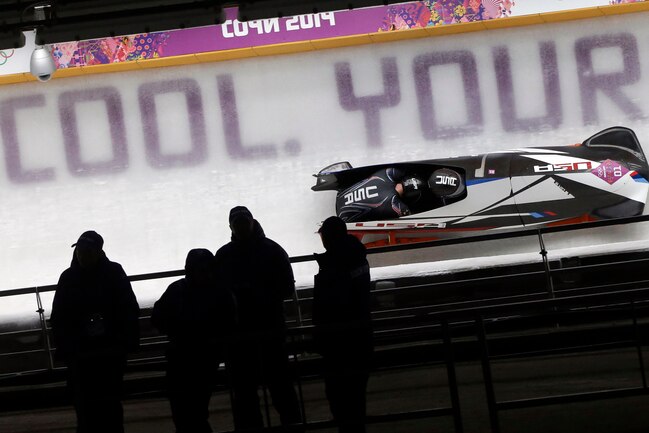
Wust, 27, captured gold in the women's 3,000-meter race her third overall speed skating gold and second at that distance but it was underdog Russian skater Olga Graf who stole the show.
Graf, who wasn't expected to reach the podium, set the arena on fire with a tremendous performance, initially snagging the lead and ultimately holding on for a bronze medal, the Russian team's first medal of the Sochi Games.
The Czech Republic's Martina Sablikova the 2010 gold medalist in the women's 3,000 meters had to settle for second place and a silver this time around.
Claudia Pechstein, who was attempting to capture her 10th overall Olympic medal, finished a surprising fourth and failed in her quest to become the oldest winter athlete to win individual gold and the first to medal in six different Games.
For the American team, it was another disappointing day at the rink.
Jilleanne Rookard, who entered today as a long shot, and finished tops among American women in 10th place.
This blog is powered by: http://8070132083.acnshop.eu
Bode Miller Fails to Medal in Men's Downhill Final at Sochi 2014 Olympics
Bode Miller, who was one of the top contenders in the men's downhill event, failed to earn a place on the podium Sunday. The American's eighth-place finish was a major disappointment on Day 2 of the 2014 Olympics after he saw so much success four years ago.
Making his fifth Olympic appearance for the United States, the 36-year-old was coming off his best Games after winning three medals, including a gold, in Vancouver.
He was confident about his chances in 2014. Barry Svrluga of The Washington Post provided comments from the skier ahead of the competition. Miller felt his preparation was putting him in a position to succeed:
I'd say I have a lot more experience. I know what the process is. It's easy for guys who are so excitable to push too hard, to do too much too early. I definitely know that winning a training run doesn't matter much. I've done that so many times. I think I have a good process for how to build into a race.
Unfortunately for Miller, things didn't play out as he hoped. Coming up short of the podium amid such high expectations is shades of 2006, when he arrived to Turin, Italy, with plenty of hype but failed to win a single medal.
Make no mistake: The Sochi course was providing a formidable test for the skiers. Miller had solid training runs, though, and appeared poised to bring home another medal.
A lack of regular competition over the past couple of years due to a knee injury could have been a factor. He hasn't needed that extra gear as often as he would have probably liked in between Olympics, but he arrived to Sochi healthy and ready to go.
In the end, it simply didn't translate into success in the downhill, the first Alpine skiing event of the Games. It shows that the margin for error, even for the top athletes in any discipline, is extremely thin on the Olympic stage.
The failure to medal in the downhill event will put extra pressure on Miller for the rest of the Olympics, but as Charles Robinson of Yahoo! notes, his best opportunities to medal are in front of him:
If he can bounce back, the event will become an afterthought. If not, it will get viewed as the start of another frustrating Games for the American.
This blog is powered by: http://visitwebpages.info/paypalchecks
Making his fifth Olympic appearance for the United States, the 36-year-old was coming off his best Games after winning three medals, including a gold, in Vancouver.
He was confident about his chances in 2014. Barry Svrluga of The Washington Post provided comments from the skier ahead of the competition. Miller felt his preparation was putting him in a position to succeed:
I'd say I have a lot more experience. I know what the process is. It's easy for guys who are so excitable to push too hard, to do too much too early. I definitely know that winning a training run doesn't matter much. I've done that so many times. I think I have a good process for how to build into a race.
Unfortunately for Miller, things didn't play out as he hoped. Coming up short of the podium amid such high expectations is shades of 2006, when he arrived to Turin, Italy, with plenty of hype but failed to win a single medal.
Make no mistake: The Sochi course was providing a formidable test for the skiers. Miller had solid training runs, though, and appeared poised to bring home another medal.
A lack of regular competition over the past couple of years due to a knee injury could have been a factor. He hasn't needed that extra gear as often as he would have probably liked in between Olympics, but he arrived to Sochi healthy and ready to go.
In the end, it simply didn't translate into success in the downhill, the first Alpine skiing event of the Games. It shows that the margin for error, even for the top athletes in any discipline, is extremely thin on the Olympic stage.
The failure to medal in the downhill event will put extra pressure on Miller for the rest of the Olympics, but as Charles Robinson of Yahoo! notes, his best opportunities to medal are in front of him:
If he can bounce back, the event will become an afterthought. If not, it will get viewed as the start of another frustrating Games for the American.
This blog is powered by: http://visitwebpages.info/paypalchecks
Olympic Men's Downhill Final Results 2014: Alpine Skiing Medal Winners and Times
Austrian Matthias Mayer stormed to Olympic gold in the men's downhill skiing as he held off Christof Innerhofer and Kjetil Jansrud.
But pre-race favourites Bode Miller and Aksel Lund Svindal could not live up to expectations as they finished down the field.
Mayer, making his Olympic bow, was joined on the podium by Italian Innerhofer in silver and Norwegian Jansrud in bronze, as indicated by WSJ Sports:
Sochi 2014 provided this photo of the crowd as they took in Mayer's performance:
And the super-G specialist joins his father Helmut Mayer, who won silver in Calgary in 1988, in winning an Olympic medal.
Mayer had been an outside bet for a medal after winning the second downhill training run on Friday, and the Austrian continued his excellent form as he set the early pace with 2.06.23, shaving one-tenth of a second off Jansrud's time.
Men's downhill skiing top 10
1. Matthias Mayer Austria 2:06.23
2. Christof Innerhofer Italy 2:06.29
3. Kjetil Jansrud Norway 2:06.33
4. Aksel Lund Svindal Norway 2:06.52
5. Travis Ganong USA 2:06.64
6. Carlo Janka Switzerland 2:06.71
7. Peter Fill Italy 2:06.72
8. Bode Miller USA 2:06.75
9. Max Franz Austria 2:07.03
10. Erik Guay Canada 2:07.04
www.sfgate.com
American legend Miller led by 0.31 seconds going following the second split, but the bronze medalist from Vancouver hit a couple of gates and could not recover as he finished outside the medals. The New York Times' Sports provides his take on the slip-up:
Mayer continued to see off the pre-competition favourites as Svindal finished 0.29 seconds behind the Austrian. The Norwegian skier was the big favourite going into Sochi and was bidding to become the first Norwegian to prevail in the men's downhill.
Innerhofer almost snatched the lead from Mayer as he stormed down the slope to get within 0.6 seconds of the Austrian. Innerhofer had been ahead following the first three splits, but he screamed with delight as he went through the finish line in silver-medal position.
Gero Breloer/Associated Press
A devastated Bode Miller reflects after his run
Reigning champion and the oldest man in the field, Didier Defago, was ahead going through the second split, but again it was the middle split that proved to be the biggest challenge as he slipped back down the field.
Defago would prove to be the final challenger to the young pretender, as Mayer was crowned men's downhill champion on his Olympic debut.
This blog is powered by: http://visitwebpages.info/paypalchecks
But pre-race favourites Bode Miller and Aksel Lund Svindal could not live up to expectations as they finished down the field.
Mayer, making his Olympic bow, was joined on the podium by Italian Innerhofer in silver and Norwegian Jansrud in bronze, as indicated by WSJ Sports:
Sochi 2014 provided this photo of the crowd as they took in Mayer's performance:
And the super-G specialist joins his father Helmut Mayer, who won silver in Calgary in 1988, in winning an Olympic medal.
Mayer had been an outside bet for a medal after winning the second downhill training run on Friday, and the Austrian continued his excellent form as he set the early pace with 2.06.23, shaving one-tenth of a second off Jansrud's time.
Men's downhill skiing top 10
1. Matthias Mayer Austria 2:06.23
2. Christof Innerhofer Italy 2:06.29
3. Kjetil Jansrud Norway 2:06.33
4. Aksel Lund Svindal Norway 2:06.52
5. Travis Ganong USA 2:06.64
6. Carlo Janka Switzerland 2:06.71
7. Peter Fill Italy 2:06.72
8. Bode Miller USA 2:06.75
9. Max Franz Austria 2:07.03
10. Erik Guay Canada 2:07.04
www.sfgate.com
American legend Miller led by 0.31 seconds going following the second split, but the bronze medalist from Vancouver hit a couple of gates and could not recover as he finished outside the medals. The New York Times' Sports provides his take on the slip-up:
Mayer continued to see off the pre-competition favourites as Svindal finished 0.29 seconds behind the Austrian. The Norwegian skier was the big favourite going into Sochi and was bidding to become the first Norwegian to prevail in the men's downhill.
Innerhofer almost snatched the lead from Mayer as he stormed down the slope to get within 0.6 seconds of the Austrian. Innerhofer had been ahead following the first three splits, but he screamed with delight as he went through the finish line in silver-medal position.
Gero Breloer/Associated Press
A devastated Bode Miller reflects after his run
Reigning champion and the oldest man in the field, Didier Defago, was ahead going through the second split, but again it was the middle split that proved to be the biggest challenge as he slipped back down the field.
Defago would prove to be the final challenger to the young pretender, as Mayer was crowned men's downhill champion on his Olympic debut.
This blog is powered by: http://visitwebpages.info/paypalchecks
Sunday, February 9, 2014
Women's Snowboarding Slopestyle Olympics 2014: Medal Winners and Final Results
USA's Jamie Anderson took gold in the Women's Snowboarding Slopestyle in the first ever event in this format.
Enni Rukajarvi was placed in silver position after two runs on the slopes, with Great Britain's Jenny Jones grabbing all of the headlines.
Jones, who has taken her first ever Olympic medal, also earned her country's first 2014 Winter Olympic medal with bronze, in event that had twists, turns and plenty of tumbles at every slope.
Ollie Williams of Frontier Sports, reporting on the Games for the BBC, capped his feelings as Jones picked up bronze, tweeting:
2014 Winter Olympics Women's Snowboarding Slopestyle
Rank Competitor (Country) Run 1 Score Run 2 Score Best Score
1 Jamie ANDERSON (USA) 80.75 95.25 95.25
2 Enni RUKAJARVI (Finland) 73.75 92.50 92.50
3 Jenny JONES (Great Britain) 73.00 87.25 87.25
4 Sina CANDRIAN (Switzerland) 7.25 87.00 87.00
5 Sarka PANCOCHOVA (Czech Republic) 86.25 20.00 86.25
6 Karly SHORR (USA) 39.00 75.00 75.00
7 Torah BRIGHT (Australia) 64.75 66.25 66.25
8 Isabel DERUNGS (Switzerland) 58.50 15.25 58.50
9 Elena KOENZ (Switzerland) 24.50 54.50 54.50
10 Anna GASSER (Austria) 49.00 51.75 51.75
11 Silje NORENDAL (Norway) 49.50 32.00 49.50
12 Spencer O'BRIEN (Canada) 30.00 35.00 35.00
The first run proved fruitful for Czech Republic's Sarka Pancochova, who sat top of the rankings after her first run score of 86.25, with USA's Jamie Anderson continuing her fine form in this year's Winter Games with a fine score of 80.75 - leapfrogging Switzerland's Sina Candrian and Finland's Enni Rukajarvi in third and fourth respectively.
Great Britain's Jenny Jones then scored 73.00 on her first run; a good score from the 33-year-old, who is still searching for her first Olympic medal.
Francis Keogh of BBC tweeted of Jones' chances to make history for her country on snow in the Winter Olympics:
Elena Koenz of Switzerland was left to languish at the bottom of the table with 24.50, after a tumble saw her lose her chance at sitting at the upper echelons of the grid after the first run, along with Canadian Spencer O'Brien and USA's Karly Shorr, who made up the bottom three.
Crowds surrounded the slopes as the final run was set to get underway; plenty of new fans to the new format at the Winter Olympics.
Norway's Silje Norendal began the final run with a score of 32, which held her position in the middle of the final ladder and out of challenging position for any medals, followed by Jenny Jones, whose run showed pace and passion as she looked to breach the top-five.
Her mammoth score of 87.25 sparked jubilant celebrations from Jones and her onlooking British fans, with tally that looked set to place her with at least a bronze medal at the end of the event, but also within an excellent chance of taking top spot.
However, it looks a short-lived victory for Candrian, looked to have grabbed her board on two occasions to seal a big score, but was awarded just 87, keeping Jones at the summit of the leaderboard with the chasing pack all yet to run.
Drama then unfolded as Pancochova barrel-rolled down the slopes, with fear amongst commentators that the catapult of snow had left her with a concussion, but thankfully, she rose to her feet to walk from the track.
CBC Olympics correspondent Kate Pettersen captured the moment of Pancochova's fall, noting the importance of wearing headgear in this event, tweeting:
This fall ended any chance of re-claiming top-spot for Sarka, who was awarded just 20 by the judges, however her first run could still see her placed with a bronze medal at Sochi, but ultimately, her health still intact, as highlighted through Buzzfeed UK's Alan White's Vine and Agence France-Presse's tweet:
Top-spot then had a new occupant, following Rukajarvi's second run, as she scored 92.50 to push Jones and Candrian back into second and third respectively, and ended Pancochova's slim hopes of leaving this event with a medal.
USA's Karly Shorr returned to the slopes with two grabs and perfectly-executed landings showing her air of confidence in the new format; however could do only score 75 to leave her 10 points short of a medal birth.
O'Brien's second run proved as fruitful as her first, scoring 35 to keep her at the foot of the table, with last-placed Koenz returning to the slopes to find 54.5.
Norway's Norendal then failed to improve on her opening score of 49.5, leaving her also to be content with a mid-table finish as four competitors remained, but still all to play for at the top of the ladder.
Then came a second run for Australia's Torah Bright, who improved on her opening score with 66.25, but ended her chances of a medal in this event.
Jamie Anderson landed a beautiful, technical run with aplomb as she looked to break into the top three, in a run that oozed experience and confidence from the offset. And with a tally of 95.25, Anderson had done enough to take the lead at the late, late stage in proceedings.
Jones still sat in third place, as Great Britain looked for their first ever Winter Olympic medal, and as Switzerland's Isabel Derungs hit 58.50, leaving her in the lower-half of the final standings.
Williams provided a statement from Jones' teammate, Aimee Fuller, discussing the historical importance:
With one ride to go from Austria's Anna Gasser, it looked likely that Anderson would take gold, and Jones would make her own history in Sochi. These feats were then realised as Gasser slipped onto her backside during the run, sealing a momentous performance for British snowboarding.
This blog is powered by: http://visitwebpages.info/paypalchecks
Enni Rukajarvi was placed in silver position after two runs on the slopes, with Great Britain's Jenny Jones grabbing all of the headlines.
Jones, who has taken her first ever Olympic medal, also earned her country's first 2014 Winter Olympic medal with bronze, in event that had twists, turns and plenty of tumbles at every slope.
Ollie Williams of Frontier Sports, reporting on the Games for the BBC, capped his feelings as Jones picked up bronze, tweeting:
2014 Winter Olympics Women's Snowboarding Slopestyle
Rank Competitor (Country) Run 1 Score Run 2 Score Best Score
1 Jamie ANDERSON (USA) 80.75 95.25 95.25
2 Enni RUKAJARVI (Finland) 73.75 92.50 92.50
3 Jenny JONES (Great Britain) 73.00 87.25 87.25
4 Sina CANDRIAN (Switzerland) 7.25 87.00 87.00
5 Sarka PANCOCHOVA (Czech Republic) 86.25 20.00 86.25
6 Karly SHORR (USA) 39.00 75.00 75.00
7 Torah BRIGHT (Australia) 64.75 66.25 66.25
8 Isabel DERUNGS (Switzerland) 58.50 15.25 58.50
9 Elena KOENZ (Switzerland) 24.50 54.50 54.50
10 Anna GASSER (Austria) 49.00 51.75 51.75
11 Silje NORENDAL (Norway) 49.50 32.00 49.50
12 Spencer O'BRIEN (Canada) 30.00 35.00 35.00
The first run proved fruitful for Czech Republic's Sarka Pancochova, who sat top of the rankings after her first run score of 86.25, with USA's Jamie Anderson continuing her fine form in this year's Winter Games with a fine score of 80.75 - leapfrogging Switzerland's Sina Candrian and Finland's Enni Rukajarvi in third and fourth respectively.
Great Britain's Jenny Jones then scored 73.00 on her first run; a good score from the 33-year-old, who is still searching for her first Olympic medal.
Francis Keogh of BBC tweeted of Jones' chances to make history for her country on snow in the Winter Olympics:
Elena Koenz of Switzerland was left to languish at the bottom of the table with 24.50, after a tumble saw her lose her chance at sitting at the upper echelons of the grid after the first run, along with Canadian Spencer O'Brien and USA's Karly Shorr, who made up the bottom three.
Crowds surrounded the slopes as the final run was set to get underway; plenty of new fans to the new format at the Winter Olympics.
Norway's Silje Norendal began the final run with a score of 32, which held her position in the middle of the final ladder and out of challenging position for any medals, followed by Jenny Jones, whose run showed pace and passion as she looked to breach the top-five.
Her mammoth score of 87.25 sparked jubilant celebrations from Jones and her onlooking British fans, with tally that looked set to place her with at least a bronze medal at the end of the event, but also within an excellent chance of taking top spot.
However, it looks a short-lived victory for Candrian, looked to have grabbed her board on two occasions to seal a big score, but was awarded just 87, keeping Jones at the summit of the leaderboard with the chasing pack all yet to run.
Drama then unfolded as Pancochova barrel-rolled down the slopes, with fear amongst commentators that the catapult of snow had left her with a concussion, but thankfully, she rose to her feet to walk from the track.
CBC Olympics correspondent Kate Pettersen captured the moment of Pancochova's fall, noting the importance of wearing headgear in this event, tweeting:
This fall ended any chance of re-claiming top-spot for Sarka, who was awarded just 20 by the judges, however her first run could still see her placed with a bronze medal at Sochi, but ultimately, her health still intact, as highlighted through Buzzfeed UK's Alan White's Vine and Agence France-Presse's tweet:
Top-spot then had a new occupant, following Rukajarvi's second run, as she scored 92.50 to push Jones and Candrian back into second and third respectively, and ended Pancochova's slim hopes of leaving this event with a medal.
USA's Karly Shorr returned to the slopes with two grabs and perfectly-executed landings showing her air of confidence in the new format; however could do only score 75 to leave her 10 points short of a medal birth.
O'Brien's second run proved as fruitful as her first, scoring 35 to keep her at the foot of the table, with last-placed Koenz returning to the slopes to find 54.5.
Norway's Norendal then failed to improve on her opening score of 49.5, leaving her also to be content with a mid-table finish as four competitors remained, but still all to play for at the top of the ladder.
Then came a second run for Australia's Torah Bright, who improved on her opening score with 66.25, but ended her chances of a medal in this event.
Jamie Anderson landed a beautiful, technical run with aplomb as she looked to break into the top three, in a run that oozed experience and confidence from the offset. And with a tally of 95.25, Anderson had done enough to take the lead at the late, late stage in proceedings.
Jones still sat in third place, as Great Britain looked for their first ever Winter Olympic medal, and as Switzerland's Isabel Derungs hit 58.50, leaving her in the lower-half of the final standings.
Williams provided a statement from Jones' teammate, Aimee Fuller, discussing the historical importance:
With one ride to go from Austria's Anna Gasser, it looked likely that Anderson would take gold, and Jones would make her own history in Sochi. These feats were then realised as Gasser slipped onto her backside during the run, sealing a momentous performance for British snowboarding.
This blog is powered by: http://visitwebpages.info/paypalchecks
Labels:
2014:,
Final,
Medal,
Olympics,
Results,
Slopestyle,
Snowboarding,
Winners,
Women's
Subscribe to:
Posts (Atom)