Showing posts with label 2014:. Show all posts

Tuesday, February 18, 2014

Sprint Cup 2014: Drivers Who Are Primed for Exceptional Seasons

Every year in NASCAR brings change for fans who have been around for years, and the 2014 season won't be any different.

With rule changes that have already affected the way drivers will make it to the Chase at the end of the year, the Sprint Cup season is sure to be shaken up tremendously.

Along with the rules being different, there will also be some new faces vying for points when the season officially kicks off in Daytona. Whether it's Austin Dillon or Kyle Larson battling out some of the top drivers in the sport for supremacy, the newbies will certainly make a difference.

Dillon has already claimed the pole for the Daytona 500 and is hoping to honor the No. 3 car with a great season.

Rookies and veterans alike will be looking to make the Chase this season, and here are a few to look for when the season begins on Sunday.


Austin Dillon

Out of Lewisville, N.C., Dillon grew up a huge Dale Earnhardt fan. With his grandfather being the owner of the famed midnight-black No. 3 car, Dillon was in victory lane back in 1998 when Earnhardt Sr. won the only Daytona 500 of his career, according to Reid Spencer of NASCAR.com.

Ironically enough, it will be Dillon who will bring the No. 3 car back to NASCAR's biggest stage and he'll do so from the pole position.

While he's already stealing headlines before his first full season in the Sprint Cup, Dillon isn't the only rookie looking to break out. But after winning Rookie of the Year several times in his career at other levels, the 23-year-old spoke about his chances, per Tom Jensen of Fox Sports:

I think it's very important. I've won it in the Truck Series, I've won it in the Nationwide Series and in the East Series. And this year is definitely going to be the toughest, probably, moving to the Cup Series. Not only that, the competition is stout for rookie of the year this year. Kyle Larson, Cole Whitt, Parker Kligerman, and there's a few others in there.

With Larson being the other leading candidate coming into the season, Dillon hasn't exactly been handed the award just yet. But after the pole win, Dillon has proven that he's not fazed by the expectations set for him.

Gil Martin, Dillon's crew chief who held the same position for Kevin Harvick last season, spoke about the pedigree of the rookie driver, according to NASCAR on Fox:

Thanks to his experience and skills in a car leading him to the 2011 Camping World Truck Series Championship and the 2013 Nationwide Series title, don't expect a lot of growing pains from Dillon.

Though he might not win a race this year, Dillon will capture multiple top-10 finishes and make a strong case for a place in the Chase at the end of the season. If Dillon can make this happen, there will be no choice at the conclusion of the season in the Rookie of the Year race.


Ricky Stenhouse Jr.

The 2013 Rookie of the Year might actually be more famous for being Danica Patrick's arm candy than his abilities as a driver.

But that can all change in 2014.

Ricky Stenhouse Jr. was last year's version of Dillon, but was somewhat underwhelming even though he was the best rookie in the field.

With just three top-10 finishes, including a third-place finish at Talladega near the end of the season, Stenhouse didn't have quite as much success as he expected, according to Jerry Bonkowski for NBC Sports:

Oh, it sucked. Last year was (one of the few) years I didn’t win a race in my career of racing from the time I was six. So, that was disappointing, but at least with Rookie of the Year, we kind of won something.

This year, there won't be any prizes handed out for being the best sophomore driver. But with the return of Mike Kelley as his crew chief, Stenhouse could be in line for a breakout season.

The change might seem like a small one, but with the chemistry Stenhouse and Kelley had at the Nationwide Series level winning two championships in 2011 and 2012 the duo should be key for a turnaround with Roush Fenway Racing.


Kasey Kahne

At 33 years old, Kasey Kahne is hardly the young driver that he was when he initially started on the NASCAR circuit. But with a great season in 2013 that landed him just outside of the top 10 in points, Kahne looks like a perfect candidate for a breakout season.

Kahne spoke about his expectations coming into the season, per Adam Jude of the Seattle Times:

There were times last year when I thought we were definitely the best car for a good portion of the early season. So we’re just trying to figure out how to do that more often and for a long part of the season. That would be great for us.

The Hendrick Motorsports driver concluded the 2013 season with two wins and six second-place finishes. The No. 5 car didn't see victory lane quite as many times as some of the top drivers, but Kahne can certainly be expected to collect a few more checkered flags and find more consistency in 2014.

Entering his third year with the team, expectations for Kahne from his fans and even himself personally appear to be quite high. But with him coming into his third season with the team, Kahne should make the Chase and be primed to finish in the top 10 in points this year.

Source: Bleacherreport
This blog is sponsored by: http://8070132083.acnshop.eu

Sunday, February 16, 2014

Sochi Winter Olympics 2014: Day 8 Winners and Losers

And on the eighth day, they rested.

While Johnny Weir, Tara Lipinski and the wonderful sprites on ice got a day off, the Sochi 2014 Olympic Games somehow soldiered on.

With no figure skating with which to contend, the spotlight shined on the slopes, where the Americans faltered and the Europeans reigned supreme.

Then it was back to the rink, where history hung over an epic hockey match between the Americans and Russians.

As always, four long years of trouble and toil boiled down to a single opportunity for these amazing athletes. Some rose to the challenge, while others faltered.

Let's take a peek at some of each.

J.R. Celski, 23, was supposed to be the next Apolo Ohno, the future of American short-track speedskating. If that's true, it's a dystopian future, bleak and dark.

Celski fell in the quarterfinals of the 1,000-meter short track, tripping over one of the markers on a turn. He was the only one who failed to finish in the quarterfinals, leaving the gold to Russia's Victor An.

Celski's Olympics will continue in the 500-meter and 5,000-meter races over the next week. But his best races have already come and gone and so too have his chances at making a splash in Sochi.

Much of the praise for America's thrilling 3-2 overtime win over the host nation in hockey will go to T.J. Oshie, a right wing for the St. Louis Blues. He scored the winning goal in a shootout that lasted forever, and certainly deserves some credit.

But let's avert our gaze from the glory boys on the offense for a moment and pay attention to the true hero of the game—Los Angeles Kings goalie Jonathan Quick. He shut down the powerful Russian trio of Ilya Kovalchuk, Pavel Datsyuk and Yevgeni Malkin in the final stanza to win the game for the U.S.

Quick stopped five shots in the shootout to keep his country in the game.

"You have a decent idea of what they are going to do," the soft-spoken Quick said after the game on NBCSN. "But those three are three of the best players in the world."

The win puts the U.S. in the driver's seat in both Group A and in the race toward Sochi gold.

Patrick Kane owes Jonathan Quick and T.J. Oshie a round or 10 at the bar tonight in Russia. Kane, the 25-year-old Chicago Blackhawks center, was all set to be the game's goat. 

In overtime, Kane broke from the pack with a breathtaking suddenness. It was him, open ice and the goal, just one man standing in the way of glory. Russian goalie Sergei Bobrovski was the loneliest man in the world, solo on a deserted island, the thousands inside the Bolshoy Ice Dome unable to help him no matter how much they willed it.

A glove save later and Bobrovski could have unseated Vladimir Putin if Russia held an election in that moment. Oshie, who took six of the American's eight penalty shots in a thrilling shootout, would later redeem Kane, eventually out-dueling Bobrovski to carry Team USA to victory. 

But that can't erase the overtime when Kane had the chance to be a hero and failed.


Charlotte Kalla of Sweden had some ground to make up in the women's cross-country relay. Skiing the anchor leg, she started in third place, 25.7 seconds behind the leaders. Against some of the best skiers in the world, winning the gold was a seemingly impossible task.

Close on her tail was Marit "Iron Lady" Bjoergen, the Norwegian legend who won her fourth gold medal earlier in the Games. Perhaps inspired by, or in fear of, one of the all-time greats, Kalla skied the race of her life. She left Bjoergen in the dust and, on the final turn, won a race to the finish against Finland's Krista Lahteenmaki.

Kalla was humble after the race, but teammate Anna Haag put it all into perspective, telling reporters (via The Washington Post), "Charlotte was skiing like a god."


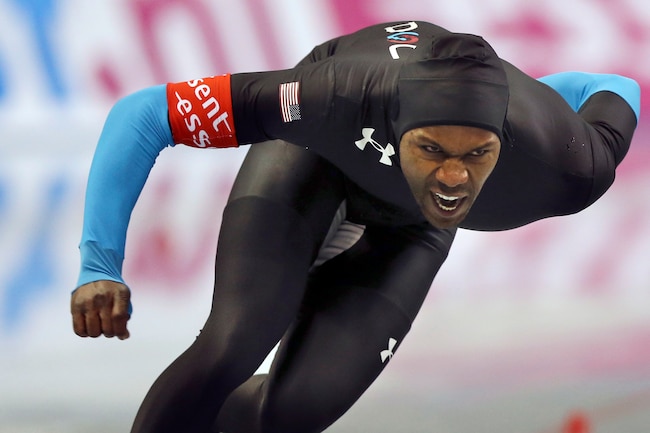
After finishing just eighth in the 1,000-meter race, speedskater Shani Davis sought redemption in the 1,500 today in Sochi. But his destiny in these games, it seems, is disappointment, as he was only the 11th-fastest man on the ice.


While age may be the true culprit, yesterday much of the blame shifted to his new Under Armour cutting-edge suit. The company's innovative vents meant to shift the air have been called a bust. Today he was back in the same suit he had significant success in during the World Cup in January.
It made little difference. The Davis era is over. 


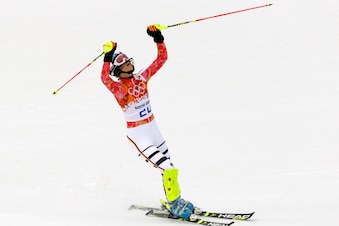
Austrian Anna Fenninger took advantage of her competitors' epic failures to ski her way to gold in the super-G. 

It was a truly treacherous course. Eighteen of the 49 competitors failed to finish the race. Fenninger, however, learned from the carnage and steered clear of trouble, beating German star Maria Hoefl-Riesch by just over half a second. 

American medal hopeful Julia Mancuso finished a disappointing eighth.


Some athletes handle defeat with grim stoicism. John Daly is not one of those men.

Daly, on the precipice of scoring an Olympic medal, slipped out of the groove at the start and limped his way to a 15th-place finish in skeleton.

"I popped out of the groove. It's happened only a handful of times in my career," Daly said on NBCSN afterward, eventually breaking into tears. "I guess that's what happens when you go for it. I left it all out there on the ice tonight. I don't regret anything, but I wish I could get that last run back for one more chance."

It was heart-wrenching to see, especially later as he realized that redemption was four years away, if it was coming at all. For most athletes, there's always the next game, the next season. Olympians don't have that luxury, adding gravitas to every single run and each and every event.


Latvian behemoth Martins Dukurs was expected to glide to a gold medal in the men's skeleton in Sochi. After all, winning was becoming a habit for the 2010 silver medalist. He had won 24 of the past 28 World Cup races, and Latvia's first gold medal seemed well within his reach.

Instead, Russia's Alexander Tretjyakov, sliding on his home track, won gold over the course of four runs, beating Dukurs by just .81 seconds. Tretjyakov, along with the rest of his team, skipped the final World Cup race of the season to return home and practice specifically for the Olympics. It's a decision that paid off smartly in gold.


There's something liberating about flying through the air, all your troubles a distant memory as the world shrinks to just you, your skis and the snow. But that freedom can come with a deadly cost, as the slightest error can have devastating consequences.

An accident in practice reminded the freestyle skiing world of that harsh reality. Russian skier Maria Komissarova crashed in the third and final jump on a practice run and immediately underwent back surgery.

“The operation is over … it's been successful,” Russian ski federation official Mikhail Verzeba told The Associated Press, revealing Komissarova had fractured her 12th dorsal vertebrae in her lower-middle back.

This blog is sponsored by: http://8070132083.acnshop.eu
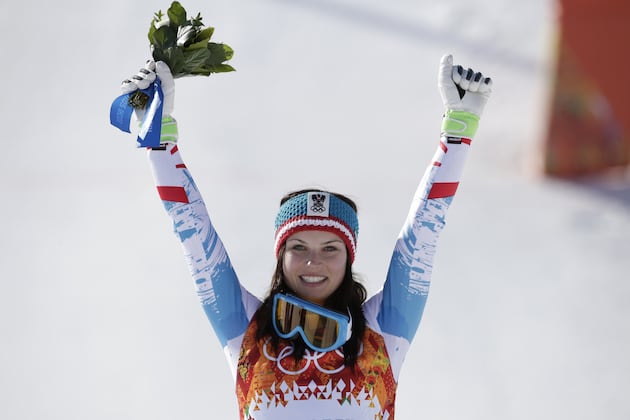
Olympic Ski Jumping 2014: Men's Large Hill Medal Winners and Results

Kamil Stoch won his second gold medal at the 2014 Winter Olympics thanks to a fantastic performance in the ski jumping large-hill event.

The Polish star won the normal-hill competition earlier in the week and then built up a big lead in this event thanks to a score of 143.4 with his first jump. However, Japan's Noriaki Kasai kept the pressure on with two top-three jumps of his own.

Still, the judges gave Stoch just enough points to stay ahead of his opponent and take home another gold medal.

Peter Prevc who earned a silver medal in the normal hill had the best second jump in the competition and earned bronze.

Here is a look at the top 10, courtesy of Sochi2014.com:

Men's Ski Jumping Large Hill Results
Rank Name                Country Score
1 Kamil Stoch                 Poland 278.7
2 Noriaki Kasai                   Japan 277.4
3 Peter Prevc               Slovenia 274.8
4 Severin Freund       Germany 272.2
5 Anders Fannemel       Norway 264.3
6 Marinus Kraus              Germany 257.4
7 Gregor Schlierenzauer Austria 255.2
8 Michael Hayboeck         Austria 254.7
9 Daiki Ito                           Japan 252.5
10 Reruhi Shimizu                   Japan 252.2
via Sochi2014.com

This competition featured two medalists from the 2010 Vancouver Games, including four-time gold medalist Simon Ammann. However, the Austrian simply did not have it in him, finishing in 23rd place. Two-time individual bronze medalist Gregor Schlierenzauer only managed a seventh-place finish.


It seemed like no one was going to beat Stoch unless he somehow struggled, which clearly did not happen on Saturday.

Interestingly, the World Cup winner had dealt with multiple problems during his time at Sochi when he was not competing.

He was sick during the day before winning the gold medal in the normal hill. According to The Associated Press (h/t ESPN), he explained, "When I woke up I felt a headache and I had a high temperature, but the doctors did everything they could do (sic) bring me to life and they did. They did a good job, so thanks to them."

The Polish star then dealt with a bad crash during training for the large hill but shook off his injuries. He told Rosa Khutor of Reuters, "I feel very good and my jumps were also good. My elbow is hurting slightly but it's not a big problem."

Fortunately, he had no such problems once the competition started, as he was able to finish with his second gold medal of these Games. He was also carried off the course yet again by his teammates:

The United States did have three athletes qualify for the first jump, although expectations were not too high based on recent history:

Things certainly did not get off to a good start when Anders Johnson was disqualified for having an illegal suit, according to Douglas Gelevan of CBC:

Nicholas Alexander finished in 48th place while Nicholas Fairall ended in 35th, neither man qualifying for the final round.

Still, the big man of the day is Stoch, who proved in Sochi that he is truly the best ski jumper in the world. Kasai put forth a great effort to get to the top of the podium, but the 41-year-old veteran will have to settle for a silver.

Of course, this result has a big effect on the world of ski jumping. Stoch has now won two Olympic events, the World Cup and the most recent world championships in Val di Fiemme. It is clear that he is just entering his prime at 26 years old and will likely win many more awards in the future.

Then again, the young challenger Prevc is still improving and showed he is capable of some big results, as described by Greg Ferraro of NBC Olympics:

It remains to be seen if the 21-year-old Slovenian can win gold in the future, but he is certain to provide plenty of competition going forward.

For more ski jumping action, tune into the men's team competition Feb. 17 at 12:15 ET.

This blog is sponsored by: http://8070132083.acnshop.eu

Friday, February 14, 2014

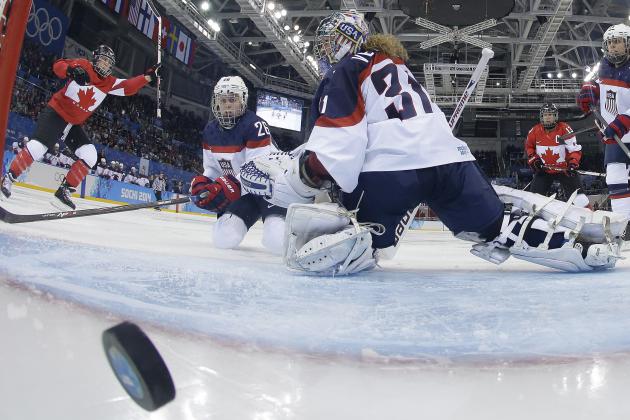
Olympic Hockey 2014: USA vs. CAN Battle Brings Women's Hockey to the Forefront

Hockey Olympic or otherwise isn't just for men.

At least, not anymore.

Teams USA and Canada are proving that women can be just as quick and hard-hitting as their male counterparts.

Both teams came in to Wednesday's game riding an undefeated Olympic streak for the year. Canada had recorded two shutouts against Switzerland and Finland, while USA had a 3-1 win over Finland and a decisive 9-0 shutout against Switzerland.

Though both teams are arguably the two best women's hockey teams this year, there is no such thing as a little friendly competition between the two.

The battle and rivalry between the two North American teams is heated, to say the least.

In December, a brawl broke out during a U.S. vs. CAN game. There was definite hostility, and it wasn't even the Olympics.


Jen Neale, writing for Yahoo!'s Puck Daddy, had it right when she wrote:

If anyone says female hockey players aren't tough like the guys, you have been officially dared to drop gloves with one of them at the rink.

On Wednesday, the competition continued in search of the gold, and the intensity grew as Canada rallied back from a 1-0 deficit in the third.

Sallie Jenkins of the Washington Post summarized the intensity of the game this way:

It was supposedly a meaningless game, just an appetizer, because both teams already had byes into the semifinals. But there was nothing casual about it as they shouldered each other into the walls and the momentum swung back and forth.

Results complaints aside, Canada left as the only undefeated team in Group A (Sweden and Russia remain undefeated in Group B).

Watching these two teams play throws every female stereotype out the window. The players move quickly, think fast and hit hard. They compete just as hard as the men.

ESPN reported that professional football was the most popular sport in America for the 30th year in a row:

In 2014, 35 percent of fans call the NFL their favorite sport, followed by Major League Baseball (14 percent), college football (11 percent), auto racing (7 percent), the NBA (6 percent), the NHL (5 percent) and college basketball (3 percent).

Not one mention of women's sports. The only thing that comes close is auto racing, where Danica Patrick is breaking barriers. Otherwise, it's nothing but males.

In a nation where men's sports are the front-runners in popular sports, the U.S. women's hockey team is making a case for women's sports everywhere.

This blog is sponsored by: http://visitwebpages.info/paypalchecks

Thursday, February 13, 2014

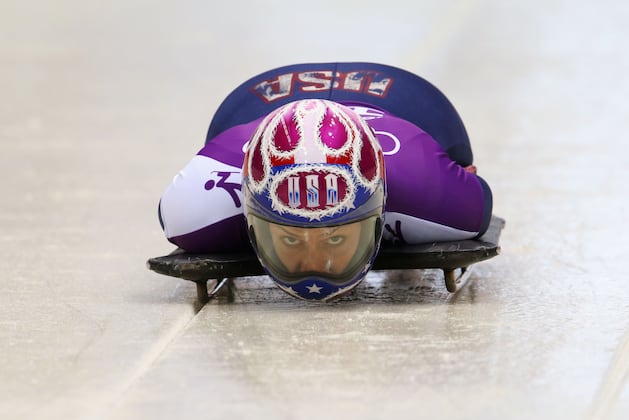
Olympic Skeleton 2014: Results Tracker, Medal Winners and More

Welcome to Bleacher Report’s hub for all things Olympic skeleton. We’ll provide you with updates and analyses right here after each event of the competition in Sochi.

For a crash course in the sport’s top storylines and athletes to watch, be sure to check out B/R’s Complete Guide to Olympic Skeleton.

This blog is sponsored by: http://visitwebpages.info/paypalchecks

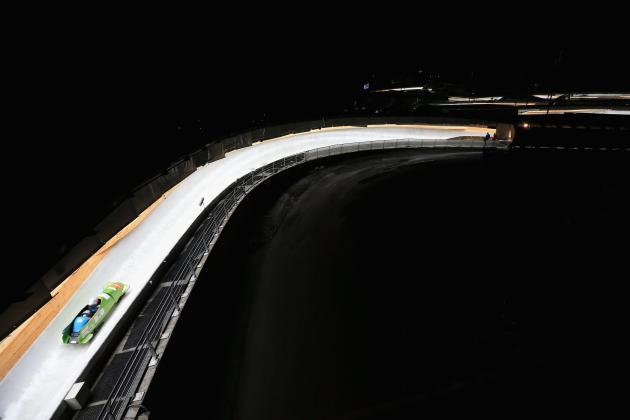
Olympic Bobsled 2014: Complete Guide for Sochi Winter Olympics

The high-speed bobsled event begins its run at the Winter Olympics on Feb. 16 and finishes on Feb. 23.

Although the sport receives little attention most of the time in the United States, it is put in the spotlight every four years at the Olympics.

Germany has been the dominant country in recent Olympic bobsled competition, but an American team won the gold medal in the four-man bobsled event at the 2010 Winter Olympics.

American women have won a medal in each of the three Olympics that featured the women’s bobsled event.

Olympic bobsled competition, officially known as bobsleigh, consists of three events: men's four-man, men's two-man and women's bobsled, which is a two-person competition.

Participants in each discipline complete four runs over two days, with the lowest cumulative time from the four runs determining the order of finish and medal awards.

Bobsledders reached speeds of nearly 95 miles per hour at the Vancouver Games four years ago, but the track for this Olympics is expected to be slower.

The venue for the 2014 bobsledding event is the Sliding Center Sanki, located in Rzhanaya Polyana, Russia, which is about 37 miles from Sochi. The course is 1,500 meters long, not including the 314-meter braking area at the end of a run. According to a CBC story, maximum speed is 135 kilometers per hour, which is about 84 miles per hour.

Bobsled competition will begin Feb. 16 with heats in the two man-event. Bobsledding concludes Feb. 23 with the final heats of the four-man event.

The United States will have three teams competing in the women's and two-man bobsled competitions and two in the four-man event. The U.S. is considered a gold-medal contender in all three.

Bobsledding first became an Olympic event in the 1924 Winter Games in Chamonix, France. Only four-man bobsled competition was held in 1924, and it was changed to a five-man event in the 1928 Winter Games before reverting back to a four-man competition in 1932.

Two-man bobsled competition was added to the Olympics at the 1932 Winter Games at Lake Placid, N.Y., and women's bobsledding became an Olympic sport in 2002 at Salt Lake City, Utah.

No bobsledding competition was held at the 1960 Winter Games in Squaw Valley, N.Y., but it has been an Olympic event in every Winter Games since.

Americans captured the gold medal in the three disciplines the first year each was an Olympic event, and American women have medaled each of the three years the Olympics featured women's bobsledding.

Germans have dominated men's bobsledding, winning the gold medal at the last three Olympics in the two-man event and taking first place in four of the past five Olympics in the four-man category. A team from Germany (including East Germany and West Germany when the country was divided) has won 15 gold medals in the 38 men's Olympic bobsled competitions held. Switzerland is next with nine gold medals in men's events.

Germany's Andre Lange has won four Olympic bobsled gold medals, the most in history. He won his second straight two-man gold medal in 2010 but finished second in the four-man competition that year before retiring.

An American four-man team led by pilot Steven Holcomb finished first in the 2010 Olympics, giving the United States its first men's bobsled gold medal since 1948. German teams finished second and fourth.

Canadian teams finished first and second in the women's bobsled competition at the 2010 Games, with Kaillie Humphries and Heather Moss capturing the gold medal.

Schedule of heats for the 2014 Olympic bobsled competition:

February 16: Two-man heats 1 and 2, 11:15 a.m. ET

February 17: Two-man heats 3 and 4, 9:30 a.m. ET

February 18: Women's heats 1 and 2, 10:15 a.m. ET

February 19: Women's heats 3 and 4, 11:15 a.m. ET

February 22: Men's four-man heats 1 and 2, 11:30 a.m. ET

February 23: Men's four-man heats 3 and 4, 4:30 a.m. ET

All events will be streamed live on NBCOlympics.com.

This blog is sponsored by: http://visitwebpages.info/paypalchecks

Wednesday, February 12, 2014

Six Nations 2014: Surprise Stars Who Must Maintain Momentum

The Six Nations championship is one of rugby's great equalisers, where those names billed as the best and brightest can often crumble under pressure of shouldering their country's dreams.

However, that platform has a flip side, providing some of the competition's lesser-known participants with an opportunity to impress on Europe's biggest stages in the Northern Hemisphere's premier international contest.

Read on for a breakdown of those names whom some may not have thought would star quite so brightly but have gripped the opportunity afforded to them and controlled it with relative comfort two weeks into the campaign.


Chris Henry, Ireland

With Sean O'Brien currently absent through injury, there was some concern over who would plug the void left at open-side in Joe Schmidt's squad.

Luckily, Ulster's Chris Henry has been a force all on his own, arguably one of the best players of the tournament thus far and holding a very astute account of his own talents on the flank.

In fact, we'll revise that talk of O'Brien's injury, given what Rugby World's Charlie Morgan had to say about Henry's great graft:

The breakdown tactician has been a bother to every side he's come up against, making a collective 21 tackles in his two games against Scotland and Wales, not to mention scoring the first try of his team's 26-3 thumping of the reigning champions.


Luther Burrell, England

Regardless of how reliable he might be on the club scale with Northampton Saints, Luther Burrell nonetheless had an air of enigma about him coming into this year's Six Nations.

With no previous international experience to speak of, England's centre conundrum could have easily continued were Burrell the latest to crumble under the weight of a national team jersey, but it's been far from the case.

Scoring on his debut, a 26-24 loss at the Stade de France, the 26-year-old got off to a flying start under Stuart Lancaster, only made to look even better by the fact that he followed that up with another important try against Week 2 opponents Scotland.

If England are to indeed salvage any attempts at challenging for 2014's Six Nations title, Burrell could be the most vital part of their chain, his well-timed lines and fluid passing currently keeping the team afloat.


Michele Campagnaro, Italy

Admittedly, Michele Campagnaro is included on this list almost entirely due to a rampaging display in Week 1 against the Welsh, but what a thrilling performance it was from the 20-year-old.

Clocking up more than 100 carrying metres and scoring two tries in his first Six Nations appearance, Campagnaro was a marvel at the Millennium Stadium, of which ex-England centre Will Greenwood certainly took note:

If the Azzurri are to have any hope of changing their fortunes, which currently see them yet to claim a point in the competition, Jacques Brunel will need all his aspiring starlets up to the task of their more senior adversaries.

Campagnaro has already shown that despite his age, he's well able to tussle with the bruising veterans of the continent, even if a 30-10 thrashing at the hands of France in Week 2 speaks somewhat more negatively of his impact.

This blog is sponsored by: http://8070132083.acnshop.eu
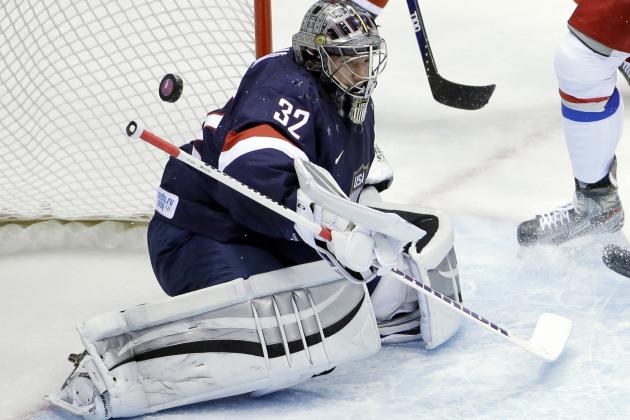
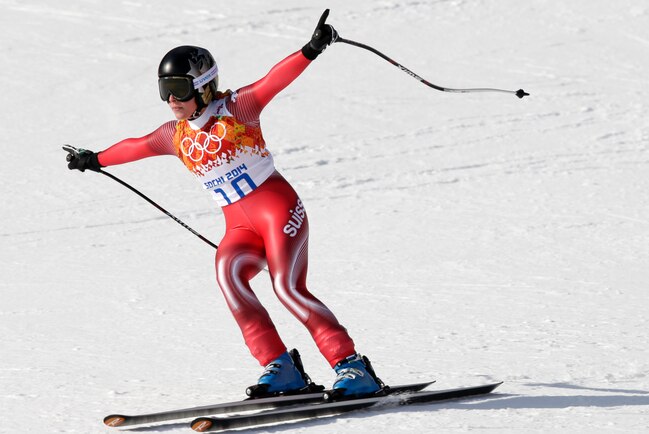
Olympic Women's Downhill Skiing Schedule 2014: TV Info, Day 5 Medal Predictions

Uncertainty will reign supreme for the world's best women skiers as they head into Wednesday's downhill final at the 2014 Winter Olympics.

Organizers were forced to cancel the final training session for the event on Tuesday, as temperatures were higher than expected and the terrain proved untenable. As noted by The Associated Press' Krasnaya Polyana (via ABC News), ruts left over from this week's super-combined competition needed to be repaired especially toward the bottom of the course.

This leaves the skiers in the field with just four instead of the typical five practice runs.


Luckily, most of the contenders have a good idea of how this will play out. Lindsey Vonn's absence from Sochi due to injury cracked the downhill field wide open, as the American star was widely expected to run away with the competition. Without Vonn, German and super-combined winner Maria Hoefl-Riesch will have a good chance, as will American Julia Mancuso, who finished second behind Vonn in Vancouver.

But there is an eclectic field here in Russia, one that won't have any fear on the slopes. And these women qualified for the Olympics for a reason. They are very, very good at skiing very, very fast down a sheet of snow.

We'll have to watch and see how this event plays out. With that in mind, let's check out how you can watch Wednesday's downhill competition and predict the medalists.

Women's Downhill Viewing Info
Date: Feb. 12
Time: 2 a.m. ET
TV: Click here for TV listings
Live Stream: Available on the NBC Olympics website


Medal Predictions

Gold: Lara Gut (Switzerland)

Gut comes into the downhill hoping to atone for a frustrating run at the super-combined. Heading into her second run, she was just 47 seconds behind Mancuso, with the rest of the field breaking perfectly for an easy medal. Hoefl-Riesch put together a solid lead time, but not an unattainable one for Gut, a Swiss who was exceptional in super-combined events in 2013.

Instead, Gut faltered. She was one of numerous high-profile skiers to disqualify herself early in her run, pulling off the slopes before even putting a medal anywhere near attainability. It was a disappointing performance that left Gut in tears after her run, her coach Hans Flatscher told Graham Dunbar of the AP (via The Charlotte Observer).

Still, the disappointment seemingly turned into motivation. Flatscher noted that his skier was still "really angry ... but after a few hours she was already in focus for the downhill."


The downhill very well could end with glory for Gut. At age 22, she came into Sochi seemingly primed for a run at gold. Gut, who was too injured to compete at the 2010 Games, was considered an up-and-coming threat for Vonn's throne in Vancouver before being ruled out. Now four years older and fully healthy, nearly everyone close to the Swiss thinks she has what it takes.

"She's physically perfect. Technically she improved because she did more work in the summer," Mauro Pini, Gut's former coach, told Dunbar (via The Washington Times). "I think the important point is Lara is not any more a little girl, she's a young lady. She is more mature."

From a purely physical standpoint, I tend to agree. But we'll have to see how she handles the mental spotlight. There is no telling whether it was nerves or merely a mental error that caused her to cough up the chance to medal in the super-combined. If it was the former, another disqualification or a poor run could forbid her contention once more.

If it's the latter, as suspected, Switzerland will be walking away with its third gold in Sochi.


Silver: Julia Mancuso (United States)

Will Mancuso ever get the rightful credit she deserves within United States skiing circles? Vonn is widely considered the most decorated female skier in the country's history, but that entirely depends upon how you judge someone's legacy.

When it comes to World Cup victories, Vonn is unimpeachable. Her 59 is more than eight times Mancuso's piddly total of seven. She consistently ranks as the first- or second-best skier in the world in season standings, dominating the downhill event to the point that she would have been the super-combined favorite just by proxy.

The Olympics are another story entirely. Vonn's only two Olympic medals came in 2010, a gold in the downhill and a bronze in the super-G. Mancuso has twice her American friend and rival's bling. She has medaled in each of the last three Olympics, with her four overall medals being the most for a female skier in U.S. history.

"That kind of stuff has never mattered to me," Mancuso told Bonnie D. Ford of ESPN. "My teammates have been incredible. Lindsey Vonn is a champion and of course has had way more success than I have on the World Cup [59 wins to seven for Mancuso], so it's definitely warranted to give her a lot of credit."

Still, with Vonn injured, Mancuso added to her total in the super-combined. Though one has to surmise she was a little disappointed with bronze considering the lead she held coming in, Mancuso raised her arms in triumph ever the good sport. Her slalom run was uncharacteristically sloppy at points, as she was unable to let go of the skis at the right time and wound up losing momentum as her run went along.

The first downhill run, on the other hand, was nearly flawless. She had a near half-second lead over Gut going into the slalom, and only the top four competitors were within a second. If past performance is any indicator of future results, Mancuso may add to her 2010 silver with a 2014 gold. I'm taking Gut, but these two are our favorites.


Bronze: Maria Hoefl-Riesch (Germany)

Believe it or not, Hoefl-Riesch is a bit of an underdog coming into the downhill. Though the AP (via Yahoo! Sports) selected her as the favorite to win the downhill, the actual results don't back that up. The German is a menace in slalom competition and has won each of the last two super-combined medals, but the downhill is arguably her worst discipline.

She ran only fifth during the downhill portion of the super-combined and was absent from the podium in Vancouver, finishing eighth. While she has had some success in the event on the world circuit, bronze is the best Hoefl-Riesch has ever done in the World Championships.


Here, then, would likely be the spot where an underdog could slip in. Tina Maze of Slovenia is the best bet to take Hoefl-Riesch's place, as is Leanne Smith, the least-discussed of the American skiers in the field. And there are a number of dark horses who could come completely out of the woodwork to a surprise medal.

Hoefl-Riesch is just performing far too well to predict any of that stuff will happen. She's been brilliant in Sochi—and all season actually. She has tamed her greatest beast with three wins in seven World Cup downhills this season and, if she wins on Wednesday, will tie the women's all-time Alpine Olympic record of four golds.

"I don't think about records so much," said Hoefl-Riesch, per the AP (via ABC News). "If it happens, it's great."

It's a bit of a long shot, but if we've learned anything in Sochi, it's never count Maria Hoefl-Riesch out of any skiing competition.

This blog is sponsored by: http://8070132083.acnshop.eu

Winter Olympics 2014: Complete Medal Recap for Day 3 in Sochi

The third day of the 2014 Sochi Winter Olympics is in the books, and team Canada has grabbed the lead in the medal count with three golds, three silvers and a bronze. Netherlands is tied with them in golds with three and has two silvers and two bronze medals to go along with those golds.

Norway, Russia and the United States round out the top five in the medal count with seven, six and five medals, respectively for each country.

So how did we get to this point?

Well if you missed any of the action on Monday, here is a full recap of each event that handed out medals on Day 3 in Sochi.


Alpine Skiing: Women's Super Combined

Gold: Maria Hoefl-Riesch, Germany

Silver: Nicole Hosp, Austria

Bronze: Julia Mancuso, United States


Julia Mancuso of the United States had a big lead after the downhill event in the morning as she led by nearly half a second over the rest of the field. The slalom was not her strongest showing, though, in the afternoon. Mancuso finished 13th in the slalom and saw her name fall from first to third on the leaderboard. Still, a medal was thrilling for Mancuso.

Maria Hoefl-Riesch of Germany was one of the favorites to win gold as the defending gold medalist in this event, so there is no surprise there. Nicole Hosp was not favored to win a medal, but after putting together two consistent races, she was able to take home the silver.


Short-Track Speedskating: Men's 1,500 Meters

Gold: Charles Hamelin, Canada

Silver: Han Tianyu, China

Bronze: Victor An, Russia


The short-track speedskating competition was certainly a disappointing day for the Americans, as American favorite J.R. Celski came up just short with a fourth-place finish. The biggest surprise of the day has to be the South Koreans failing to collect a medal in an event they have historically dominated.

Streeter Lecka/Getty Images
J.R. Celski was left in disappointment on Monday, but he will get his shot at glory once again in Sochi.
Charles Hamelin looked strong all day as he won his heat race, semifinal race and the gold medal, while Han Tianyu pulled a bit of a surprise by sneaking onto the podium with a silver-medal finish. Victor An of Russia brought home a medal for the home country as well.


Speedskating: Men's 500 Meters

Gold: Michel Mulder, Netherlands

Silver: Jan Smeekens, Netherlands

Bronze: Ronald Mulder, Netherlands


Things could not have gone any better for the Dutch side on Monday as they swept the podium in speedskating for the men's 500-meter race.

The result was a pretty stunning one. The Dutch are extremely good in speedskating, but most expected at least someone from South Korea to get a medal on Monday. That did not happen, though, as the Dutch showed their might and took home the gold, silver and bronze.

Oddly, despite the Netherlands' dominance in long-track speedskating, this was the first time in 90 years of Winter Olympic history that a Dutch skater won the men's 500 meters.


Biathlon: Men's 12.5-Kilometer Pursuit

Gold: Martin Fourcade, France

Silver: Ondrej Moravec, Czech Republic

Bronze: Jean-Guillaume Beatrix, France


Much like in speedskating, the biathlon included a big surprise as well. Martin Fourcade of France was expected by many to medal in the event, but no one thought that Norway would be shut out of the top three and be left off the podium.

Historically, Norway has been very good in the biathlon, but this time they could only manage finishes of fourth and seventh place. Not enough to go home with a medal.


Freestyle Skiing: Men's Moguls

Gold: Alex Bilodeau, Canada

Silver: Mikael Kingsbury, Canada

Bronze: Alexandr Smyshlyaev, Russia


The Canadians were expected to dominate in men's moguls much like they did in the women's moguls, and they didn't disappoint. Canada finished with three of the top four spots in the finals and had another competitor finish in ninth place.

Russia was able to bring home another medal behind Alexandr Smyshlyaev, which put them past the Americans for fourth in the medal count at the end of Day 3.

Patrick Deneen, a medal contender from the United States, only managed to finish in sixth on Monday.

This blog is sponsored by: http://visitwebpages.info/paypalchecks

Tuesday, February 11, 2014

Olympic Speedskating Schedule 2014: TV Info and Live-Stream Guide for Day 4

After Day 3 of the Sochi Games saw a flurry of activity on the ice rinks, Tuesday will not be as action-packed for the speedskaters.

In fact, the ladies will get the speedskating Olympic spotlight to themselves on Day 4. The only speedskating event on tap for Tuesday is the ladies' 500 meters.

This has to come to the dismay of the red-hot Netherlands team. The Dutch were fantastic on Monday. That was highlighted by a podium sweep in the men's 500-meter long-track race with Michel Mulder (gold), Jan Smeekens (silver) and Michel's twin Ronald Mulder (bronze).

Meanwhile, the Americans will be looking to get their speedskating hopes back on track. Legend Shani Davis missed out on the podium in his first event on Monday, and short-track star J.R. Celski just missed the podium with a fourth-place finish in the 1,500-meter short-track race.

Neither of those two highlighted stars will be on display on Tuesday.

Ladies’ 500-Meter Long-Trace Race (First of Two)

Date: Tuesday, Feb. 11

Time: 7:45 a.m. ET, 4:45 p.m. Sochi time and 12:45 p.m. GMT

TV Broadcast: NBC Sports Network at 7:45 a.m. ET, NBC at midnight (rebroadcast) and BBC at 12:45 p.m. GMT

Live Stream: NBCOlympics.com


Ladies’ 500-Meter Long-Track Race (Second of two)

Date: Tuesday, Feb. 11

Time: 8:45 a.m. ET, 5:45 p.m. Sochi time and 1:45 p.m. GMT

TV Broadcast: NBC Sports Network at 8:45 a.m. ET, NBC at midnight (rebroadcast) and BBC at 1:45 p.m. GMT

Live Stream: NBCOlympics.com


Previewing the 500 Meters

One of Team USA's brightest speedskating stars will be taking the ice for this event.

Heather Richardson is the face of a resurgent women's long-track team for the Americans. She was recently the first American woman to win the world sprint crown since 2005.

She and teammate Brittany Bowe enter these games as expected medalists.


Those hopes, however, are more due to their domination in the 1,000 meters. Both Richardson and Bowe are converted in-line skaters. They both are also better at the 1,000 than the 500.

This is not to suggest that they are hopeless in the 500; chances are, one of them will pick up a bronze.

With South Korean defending champion Lee Sang Hwa and Russia’s Olga Fatkulina also in the mix in the 500, there isn't a lot of opportunity for any other skaters to sneak into the top two.

Lee is the world-record holder in the event, and she was first in the overall World Cup standings for the 500 meters in the 2012-13 season. She will have to slip up for someone else to snag a gold in this event.

Meanwhile, this will all prove to be valuable experience for Richardson in her second Olympics. This is key for her to achieve her lofty goals.

As passed along by John Powers of The Boston Globe, Richardson put far greater expectations on herself in Sochi than she did in Vancouver:

In Vancouver I was just happy to be there. Here, I actually want to put in some solid races, just go out, relax, and do my best, hopefully be on the podium. My goal is to be on the podium in at least one of my three individual events.

Richardson has a chance to take a step toward that goal on Tuesday.

This blog is sponsored by: http://visitwebpages.info/paypalchecks

Olympic Snowboarding 2014: Schedule, TV Info, Team Medal Predictions for Day 4

Day 4 of the 2014 Olympics in Sochi brings one of the most exciting events of the Winter Games—men's halfpipe. This is one event in which the United States is certainly looking for a gold medal, as snowboard sensation Shaun White will be in action.

However, White will not be without stiff competition, as up-and-coming Japanese snowboarder Ayumu Hirano will look to give him a run for his money. Also, American Danny Davis will look to keep his hot streak alive, as he won the 2014 Winter X Games while White and Hirano missed the event.


This event is must-see TV, so let's break down when each round will be taking place on Tuesday to ensure that none of the action will be missed.


Viewing Information

What: Men's Halfpipe

When: Tuesday, Feb. 11

Where: Rosa Khutor Extreme Park


TV Times

Qualification Round: 5 a.m. ET

Semifinals: 10 a.m. ET

Finals: 12:30 p.m. ET

Channel: NBC

Live Stream: NBCOlympics.com


Medal Prediction

White of Team USA figures to be the name to watch during this event. White pulled out of the men's slopestyle event in Sochi so he could fully focus on the halfpipe.

He has found a great amount of success in this event in the past, as he won gold medals in the 2006 Olympics in Turin and again in 2010 in Vancouver. Despite being on the snowboard scene for over a decade, White continues to push himself with each contest, seemingly remaining one step ahead of his competition.

White will look to become the first American male to earn a gold medal in three consecutive Winter Games.

White will not only have to battle his competition, but the course conditions as well. During an interview with Lindsay H. Jones of USA Today, he explained that the conditions in Sochi weren't perfect:

The first day, the walls were a little over-[vertical], so everybody was doing airs, and then landing like pretty flat. Today, they made the walls better so everybody lands [correctly], but in the flat bottom, where they cut it, it's like a bump, so everyone is riding along and then hits the bump, and that's really not very good.

Hirano became the youngest medalist in the history of the Winter X Games earlier this year, when he took home the silver medal at the age of 14. Now at 15 years old, Hirano continues to nip at White's heels with some impressive air in this event.

In snowboard circles, Hirano is considered by many to be White's heir apparent. It will be interesting to see how close of a competition we will get from this youngster from Japan.

Of course, American Danny Davis cannot be counted out of this conversation. Davis has been on a hot streak lately, as he finished in first place earlier this year in the 2014 Winter X Games' superpipe event in Aspen.

Davis is back in action after a brutal injury suffered back in 2010 which cost him a spot on the Olympic team in Vancouver. During an interview with Rachel Axon of USA Today, Davis is excited about his opportunity in this year's Olympics:

I wasn't ready to be done. Like I've always said, to have the chance to go to Russia, to have the chance to be on an Olympic team, I'm psyched. It wouldn't have killed me if I didn't make it, but I'm very happy that I did and I'm very excited for the opportunity.

Davis will look to continue to ride his hot hand in order to finally claim some Olympic glory of his own.

Gold: Shaun White

Silver: Ayumu Hirano

Bronze: Danny Davis

This blog is sponsored by: http://visitwebpages.info/paypalchecks

Olympic Freestyle Skiing 2014: Women's Slopestyle Qualifying Results

The early action in Day 4 of the 2014 Winter Olympics in Sochi included the women’s slope style qualifying runs for freestyle skiing.

American Keri Herman, who is on the short list of medal hopefuls, was definitely excited for the event to get underway.

Some bad news that came down the pipe before the event even started was the fact that Maggie Voisin and Tiril S. Christiansen had to pull out of the event.

At 15-years-old, Voison was set to be the youngest U.S. Olympian since 1972.

Unfortunately for the competitors, the injuries are par for the course.

The Cliff notes for the qualifying runs is that every competitor has the chance to ski two times, and the top 12 individual run scores advance to the final. The fact that there are two runs provides a bit of leeway in case of a poor run on the first attempt.

Herman was one such skier who struggled in her first try and stumbled on the landing of a jump, which put the pressure on for her second run in qualifying.

Julie Jacobson/Associated Press
Like the excellent Olympic athlete that she is, Herman came through in the clutch. Her second run was good enough to qualify for the finals, which is all she could ask for in the qualifying process.

Another skier who struggled on her first qualifying attempt was Lisa Zimmermann of Germany, who was the World Cup standings leader heading into the Olympics. She fell on her first run, which put one of the heavy favorites behind the proverbial eight-ball in the early going.

Unlike Herman, Zimmermann did not come through when it was most needed on the second run, failing to clinch a spot in the finals. It was certainly a disappointment for such a talented skier.

Elsewhere, Camilla Berra of Switzerland landed a double front flip in her first run, which gave her the early lead, but Dara Howell of Canada, who used to be a figure skater, became the first to receive a score better than 80 and showed her appreciation to the crowd.

Anna Segal of Australia proved that the Land Down Under can produce winter athletes as well as summer athletes by clinching a spot in the finals. She has a history of success under her belt.

eenager Julia Krass of the United States was fired up to have the chance to compete at the Olympic level and will also compete in the finals.

Perhaps most alarming in the qualifying runs was the nasty spill for Canadian Kaya Turski, which was made even worse because of her recent health issues.

She was certainly one of the favorites heading into the event and needed to come through in the second run to remain in the competition. With the knee clearly posing a problem, she was not able to do so, which eliminated another serious contender and making it anyone's game in the finals.

Here is what the top 12 looked like after the qualifying runs:

Olympic Freestyle Skiing: Women's Slopestyle Qualifying Leaderboard
Place Name                   Country                        Best Score
1 Dara Howell                   Canada                           88.8
2 Kim Lamarre                   Canada                           85.4
3 Katie Summerhayes           Great Britain                   84
4 Yuki Tsubota                   Canada                           81
5 Devin Logan                   United States                   80.4
6 Emma Dahlstrom           Sweden                           79.2
7 Anna Segal                   Australia                           78.8
8 Julia Krass                   United States                   78.4
9 Eveline Bhend                   Switzerland                   77.2
10 Camillia Berra                   Switzerland                   74.8
11 Keri Herman                   United States                   72.4
12 Silvia Bertagna                   Italy                           70.6
NBCOlympics.com


With the qualifying runs in the rear view mirror, it’s time for the freestyle skiing world to turn its attention to the finals. Here is a schedule for the event with broadcast information:

Women’s Ski Slopestyle Final
Date: Tuesday, Feb. 11
Time: 4 a.m. ET, 1 p.m. Sochi time and 9 a.m. GMT
Broadcast Information: Live stream at NBCOlympics.com at 4 a.m. ET, NBC at 3 p.m. and 8 p.m. ET (rebroadcast) and BBC at 9 a.m. GMT

Who are the medal favorites? Let’s dig into a discussion on some names to watch in the finals.

Who to Watch For in Finals:
Dara Howell, Canada
Keri Herman, United States


While the qualifying runs were certainly exciting, medals will be handed out in the finals, which is the ultimate goal for every Olympian.

One of the serious contenders for the gold is Howell of Canada, who finished second in the World Ski Championships in slopestyle and third at the 2013 Winter X Games.

What’s more, she finished in second place at the U.S. freestyle championships in Vermont and found the podium in slopestyle at the New Zealand Winter Games.

The Canadian freestyle skiing team has already seen gold and silver in the men’s moguls from Alex Bilodeau and Mikael Kingsbury respectively, so don’t be surprised if Howell adds to the success.

American Herman may represent Uncle Sam’s best shot at the podium in this event, thanks to her impressive resume that includes a silver medal in the 2010 Winter X Games, a silver medal in the 2010 Euro Winter X Games, the second overall spot in the 2010 AFP rankings, a silver medal in the 2011 Winter X Games and a victory in the opening Olympic qualifying period slopestyle World Cup in Argentina in 2013.

Herman also has a number of other top finishes under her belt and became the first woman from the United States to take home the World Cup slopestyle title.

One competitor that the North Americans won't have to worry about now is Zimmermann from Germany, who was on the short list of favorites for the podium.

She is notable because, at such a young age she became the first female to land a double-cork 1260 in any competition, which caught the eye of fellow skier Turski, whose quotes were relayed by Megan Michelson of ESPN.com:

It's very impressive. Lisa is probably the only [woman] that can do the dub 12, which is huge... It definitely makes all of us think a little bit about what we need to be doing. It pushes me to work on what I'm doing.

Unfortunately for freestyle fans, the double-cork 1260 will not make an appearance in the finals.

Whoever brings home the gold, it is certainly set to be an exciting final. Make sure to tune in.

This blog is sponsored by: http://visitwebpages.info/paypalchecks

Monday, February 10, 2014

Women's Speedskating Olympics 2014: Women's 3000m Medal Winners and Times

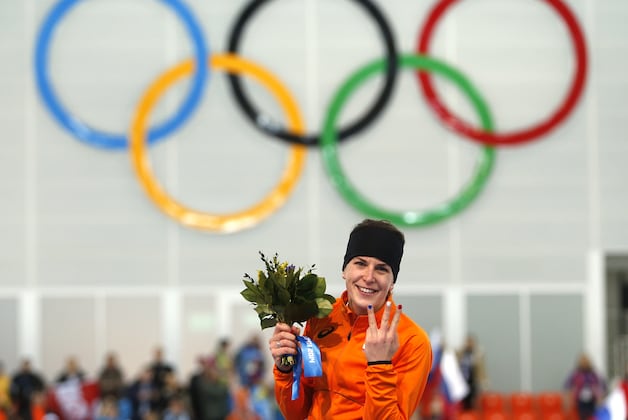
Ireen Wust won her third Olympic gold medal as she romped home to victory in the women's 3,000-meter speedskating event.

Defending champion Martina Sablikova of the Czech Republic took silver, while Russian Olga Graf won an emphatic bronze.

Graf had briefly threatened to cause an upset and send the home crowd into raptures as she blitzed around the Adler Arena. The 30-year-old clocked a time of four minutes, 3.47 seconds.

Women's 5,000-Meter Speedskating Results
1. Ireen Wurst Netherlands 4:00.34
2. Martina Sablikova Czech Republic 4:01.95
3. Olga Graf Russia 4:03.47
4. Claudia Pechstein Germany 4:05.26
5. Annouk van der Weijden Netherlands 4:06.73
6. Ida Njaatun Norway 4:06.77
7. Antoinette de Jong Netherlands 4:09.36
8. Yuliya Skokova Russia 4:09.39
9. Shiho Ishizawa Japan 4:10.02
10 Jilleanne Rookard USA 4:10.17
Sochi2014.com

Despite the eight skaters to come, the home athlete's time was just enough to cling on for a bronze medal and secure the host's first medal of the Games.

Sablikova topped Graf's time as she came home in 4:01.95, but she did not hold on to pole position for long as Wust stepped onto the ice next.

The Dutch skater, who won over the same distance in 2006, blew away her Czech rival by over 1.5 seconds in 4:00.34. Among the spectators at the Adler Arena, Wust was cheered home by King Willem-Alexander of Holland.

So impressive was Wust's display that Sablikova clapped her rival off the ice, as reported by the Associated Press' Paul Newberry, via ABC News. Sonali Karnick of CBC Radio One in Quebec tweeted her appreciation of Wust's victory.

The victory reaffirms the Netherlands' superiority on the ice, as they completed a 1-2-3 in the men's 5,000 meters Saturday. The win also sent the Netherlands up to second in the medal table, with four, two of which being gold. All of those medals have come at the Adler Arena.

Elsewhere, 41-year-old Claudia Pechstein missed out on winning a remarkable 10th Olympic medal. The German struggled to stay in contention over the final laps and eventually had to settle for fourth with a time of 4:05.26.

But for Wust, it was a third taste of Olympic glory, with another shot to come in the 5,000-meter event on Feb. 19. Fans should expect her to be ready, just as she announced on Twitter and Instagram Saturday heading into Sunday's event.

She will also go for the 1,500-meter event, where she is hot favorite to take home gold. And it is difficult to see past Wust leading home the Dutch pursuit team to gold.

If Wust can add one more gold to her resume, she would join Fanny Blankers-Koen one of the most successful Dutch Olympic athletes of all time on four gold medals.

This blog is powered by: http://visitwebpages.info/paypalchecks/

Olympic Alpine Skiing 2014: Live Men's Downhill Medal Results and Analysis

The winner of the Olympic men's downhill race was not a favorite going in, but he became a household name afterward.

Austria's Matthias Mayer was the 11th racer on the course at the Rosa Khutor Alpine Center and he would prove to be the best of the 50 competitors with a time of 2:06.23.

Mayer, who has not finished higher than fifth in a World Cup downhill race, took the skiing world by surprise as the favorites slipped up in the middle of the course.

Mayer was close to being taken out of the lead by Italy's Christof Innerhofer, but the Austrian survived by six-hundredths of a second to keep the gold.

Innerhofer finished in second place with a time of 2:06.29, while Kjetil Jansrud of Norway earned the bronze by racing a 2:06.33.

Bode Miller of the United States came in as the gold-medal favorite, but he failed to place anywhere close to the podium in eighth after he lost plenty of time in the middle of the course.

The same section of the course caused problems for two other medal hopefuls, Aksel Lund Svindal of Norway and Didier Defago of Switzerland. Svindal finished fourth and Defago ended up in 14th.

The highest-placing American was Travis Ganong, who finished in fifth place with a time of 2:06.64.

Gold: Matthias Mayer (Austria): 2:06.23
Silver: Christof Innerhofer (Italy): 2:06.29
Bronze: Kjetil Jansrud (Norway): 2:06.33

This blog is powered by: http://visitwebpages.info/paypalchecks

Olympic Speedskating 2014: Full Projections for Sport's Biggest Stars

One of the most anticipated events of the Winter Olympics is speedskating, and there are a few superstars getting set to dominate the field when the action kicks off in Sochi.

One day after the opening ceremony, on Feb. 8, the first race (men's 5,000 meters) took place at Adler Arena, with Dutch skaters sweeping the podium. 14 days later, on Feb. 22, the men's and women's team pursuits will close out the action, with 12 medal events in total throughout the two-week bonanza.

Athletes from all across the globe will compete in these Games, and the pressure to perform at their best will be intense.

“I definitely think there’s going to be pressure,” U.S. Olympian Heather Richardson said, as noted by the Associated Press, via The Columbus Dispatch. “I’ve just got to remember to take deep breaths and have fun. That’s when I skate my best.”

Here's a look at what to expect from the top speedskating stars at the 2014 Winter Games.


Shani Davis, USA

Koji Sasahara/Associated Press
Shani Davis is the biggest star on a loaded U.S. team that could make some serious waves at Sochi. The 31-year-old Olympics veteran will be attempting to earn a three-peat in the men's 1,000-meter race after winning gold in 2006 and 2010.

He's also going to be competing in the 1,500-meter race—an event he's finished in second place the past two Winter Games.

Davis is still extremely driven to succeed, despite his past success.

"Anytime I step out on the ice and I put my hood on, I have something to prove," he said, as relayed by Paul Newberry of the Associated Press, via the Evanston Review. "It's not easy. These guys are getting stronger and stronger."

With younger skaters like Kjeld Nuis of the Netherlands and Zbigniew Brodka of Poland coming on strong in recent years, Davis will need to bring his A-game to Sochi if he wants to continue building his legacy as an all-time great.

Projections: Davis will once again claim gold in the 1,000-meter race, and he'll win bronze in the 1,500-meter race.


Martina Sablikova, Czech Republic

You know you're a star when people start calling you, "The queen of skating."

This is the moniker Czech superstar Martina Sablikova earned after winning double-gold in the women's 3,000-meter and 5,000-meter races during the 2010 Winter Games in Vancouver.

She won the gold in the 5,000-meter race at the Sochi World Championships in 2013, which was her sixth straight world title in the event, as NBC's Amanda Doyle pointed out:

Sablikova also won a silver in the 3,000-meter race during those championships, and she'll be favored to finish on the podium in both races during the Winter Games.

At this point, it seems the only thing that could slow her down in her favored 5,000-meter race is her own health, which caused some problems in 2013, as detailed by Reuters, via NBCOlympics.com:

Last year her back caused her problems while a groin injury was to blame for her last placed finish in the 1500m World Cup event in Salt Lake City in November.

Sablikova says she feels 'good now', though, and results have confirmed that theory. She leads the 3,000m/5,000m World Cup standings after three wins in four events this year.

Projections: Sablikova will win gold again in the 5,000-meter race and silver in the 3,000-meter race.


Heather Richardson, USA

Heather Richardson of the United States is the biggest challenger to Canada's Christine Nesbitt, who has seen her status as the top women's star in the 1,000-meter race diminish in the past year or so.

In fact, Richardson's biggest competition could come from her own team, as Brittany Bowe will push her to the limit. The two American stars are ranked No. 1 and No. 2 in the World Cup standings for the 1,000-meter race, with Richardson holding down the top spot.

She spoke about the benefit of having a top competitor for a teammate recently, via The Columbus Dispatch:

We’re teammates, friends, competitors and roommates. It’s really special to have one of the fastest, if not the fastest, girl in the world on my team, working with me day in and day out. We’re really lucky to have each other.

Richardson will compete in three races—the 500-meter sprint, the 1,000-meter and the 1,500-meter races. She's the favorite to win the 1,000-meter and should finish on the podium in the 500-meter, but it will be surprising if she medals in the longer race.

Projections: Richardson will win bronze in the 500-meter sprint, gold in the 1,000 meters and will finish off the podium in the 1,500-meter race.

This blog is powered by: http://visitwebpages.info/paypalchecks

Olympic Men's Downhill Final Results 2014: Alpine Skiing Medal Winners and Times

Austrian Matthias Mayer stormed to Olympic gold in the men's downhill skiing as he held off Christof Innerhofer and Kjetil Jansrud.

But pre-race favourites Bode Miller and Aksel Lund Svindal could not live up to expectations as they finished down the field.

Mayer, making his Olympic bow, was joined on the podium by Italian Innerhofer in silver and Norwegian Jansrud in bronze, as indicated by WSJ Sports:

Sochi 2014 provided this photo of the crowd as they took in Mayer's performance:

And the super-G specialist joins his father Helmut Mayer, who won silver in Calgary in 1988, in winning an Olympic medal.

Mayer had been an outside bet for a medal after winning the second downhill training run on Friday, and the Austrian continued his excellent form as he set the early pace with 2.06.23, shaving one-tenth of a second off Jansrud's time.

Men's downhill skiing top 10
1. Matthias Mayer Austria 2:06.23
2. Christof Innerhofer Italy 2:06.29
3. Kjetil Jansrud Norway 2:06.33
4. Aksel Lund Svindal Norway 2:06.52
5. Travis Ganong USA 2:06.64
6. Carlo Janka Switzerland 2:06.71
7. Peter Fill Italy 2:06.72
8. Bode Miller USA 2:06.75
9. Max Franz Austria 2:07.03
10. Erik Guay Canada 2:07.04
www.sfgate.com

American legend Miller led by 0.31 seconds going following the second split, but the bronze medalist from Vancouver hit a couple of gates and could not recover as he finished outside the medals. The New York Times' Sports provides his take on the slip-up:


Mayer continued to see off the pre-competition favourites as Svindal finished 0.29 seconds behind the Austrian. The Norwegian skier was the big favourite going into Sochi and was bidding to become the first Norwegian to prevail in the men's downhill.

Innerhofer almost snatched the lead from Mayer as he stormed down the slope to get within 0.6 seconds of the Austrian. Innerhofer had been ahead following the first three splits, but he screamed with delight as he went through the finish line in silver-medal position.

Gero Breloer/Associated Press
A devastated Bode Miller reflects after his run
Reigning champion and the oldest man in the field, Didier Defago, was ahead going through the second split, but again it was the middle split that proved to be the biggest challenge as he slipped back down the field.

Defago would prove to be the final challenger to the young pretender, as Mayer was crowned men's downhill champion on his Olympic debut.

This blog is powered by: http://visitwebpages.info/paypalchecks

Sochi 2014: How I became the Private Gomer Pyle of the Winter Olympics

Mercifully, the time for scene-setting is now over, so let the snow and ice-capades of the 22nd Winter Olympiad begin.

You will be aware by now that a shivering swarm of the world's media converged on Sochi this week. Their brief: scene-setting in the buildup to the Winter Olympics. It was a task that appeared largely to involve the chronicling of security threats, legalised homophobia and their own appalling working conditions. We've all heard the stories: beleaguered journalists roaming the shores of the Black Sea frantically beachcombing for functional scraps of wi-fi.

The curious case of the Sochi double toilets
Tuesday 4 Feb 2014
We've all seen the pictures: amusing toilets with accompanying guidelines that appear to outlaw angling in them. Give a man a fish and you'll feed him for a day. Advise him not to fish and he'll make you an object of global derision on Twitter and Facebook.

Against this backdrop of diligently documented paranoia, fear, hatred and assorted workers' rights abuses, a fortnight-long festival of sliding is due to break out. In the wake of a mirth-inducing opening ceremony that will no doubt further showcase the eccentricities of funny foreigners and their funny foreign ways, the world's foremost winter sports practitioners will don garish Lycra and take to the ice and snow to do battle against the elements and each other in their collective bid for Olympic glory. This column has not been lucky enough to be dispatched to witness their exploits at first hand; it has been working diligently behind the scenes much closer to home.

It all started before Christmas, when a colleague and I were despatched to the University of Bath, a seat of learning and sporting excellence in a beautiful English town, where the cream of Great Britain's sliding elite had gathered for a media briefing: speed-skaters, skeleton-sliders, curlers, snowboarders, ice dancers, skiers and bobsleigh drivers. For a land mass boasting large areas where light snowfall invariably prompts the total breakdown of local infrastructure, Britain seems to produce a surprising number of athletes who thrive in freezing conditions. They seem, to a man and woman, very nice people, albeit people who had quite clearly been very carefully trained in the field of straight-batting queries from journalists. None of them had opinions they were prepared to venture on Russian homophobia. With a couple of high-profile exceptions, pretty much all of them hoped to finish in the top 10.

Some weeks later I found myself en route to Ostersund, a small town in Sweden where the good people of the TV station Eurosport had invited me to try my hand at the Olympic sport of biathlon. One of the more bewildering of the many perplexing disciplines to be contested in Sochi, it combines cross-country skiing and rifle shooting and originated as an exercise for Norwegian soldiers.

Long an object of bemusement for the apparent randomness of the disciplines involved, winter biathlon once prompted the comedian Jerry Seinfeld to muse that it's like combining swimming and strangling a guy. "Why don't we have that?" he wondered, with the inquisitive air of a man who has never seen or played a game of water polo.

Hailing from a particularly flat part of Ireland where food can be purchased in shops, I have never felt compelled to either ski or shoot a gun and it quickly became apparent that I was predictably and comically inept at the former. With rifle in hand, however, it was a completely different story and as I peppered target after target – 13 in a row, it took two to get my eye in – from 50 metres, it occurred to me that I was biathlon's answer to Private Gomer Pyle.

The slow-witted, overweight and clumsy marine cadet from Stanley Kubrick's Full Metal Jacket, Gomer Pyle is the cruel nickname bestowed upon a mentally unstable recruit who is largely useless but eventually shows stunning aptitude for marksmanship, only to blow his own head off while having a breakdown in a communal latrine not entirely dissimilar to those currently prompting no end of mirth in Sochi.


Skeleton: how to hurtle down an ice-track on a 'tea tray' – Winter Olympics 2014 video
Having finally found exactly half a sport I'm not terrible at after a lifetime of trying, it was back to Bath University to experience the skeleton, a hair-raising suicide-hurtle disparagingly known to laymen as That Thing With The Tea Tray. For a nation that has no ice chute through and around which participants can arrow at speeds of up to 95mph protected only by a helmet, Great Britain is remarkably good at skeleton, having produced reigning Olympic champion Amy Williams (now retired), as well as genuine Sochi gold medal hopes Shelley Rudman and Lizzy Yarnold.

The trio's success has been attributed in no small part to Bath's 140m long push-start track, down which I was lucky enough to find myself not so much careering as rolling reasonably sedately, headfirst with my chin a few inches off the ground, at a fairly leisurely 30mph just last week.

Rolling on wheels down a track that boasts neither curve nor camber, it bears as much relation to the experience of actual skeleton as gently plodding along Blackpool beach aboard a donkey does to riding a racehorse in the Grand National but, needless to say, I was terrified. Mercifully, the time for scene-setting is now over, so let the snow and ice-capades of the 22nd Winter Olympiad begin.

This blog is powered by: http://visitwebpages.info/paypalchecks